
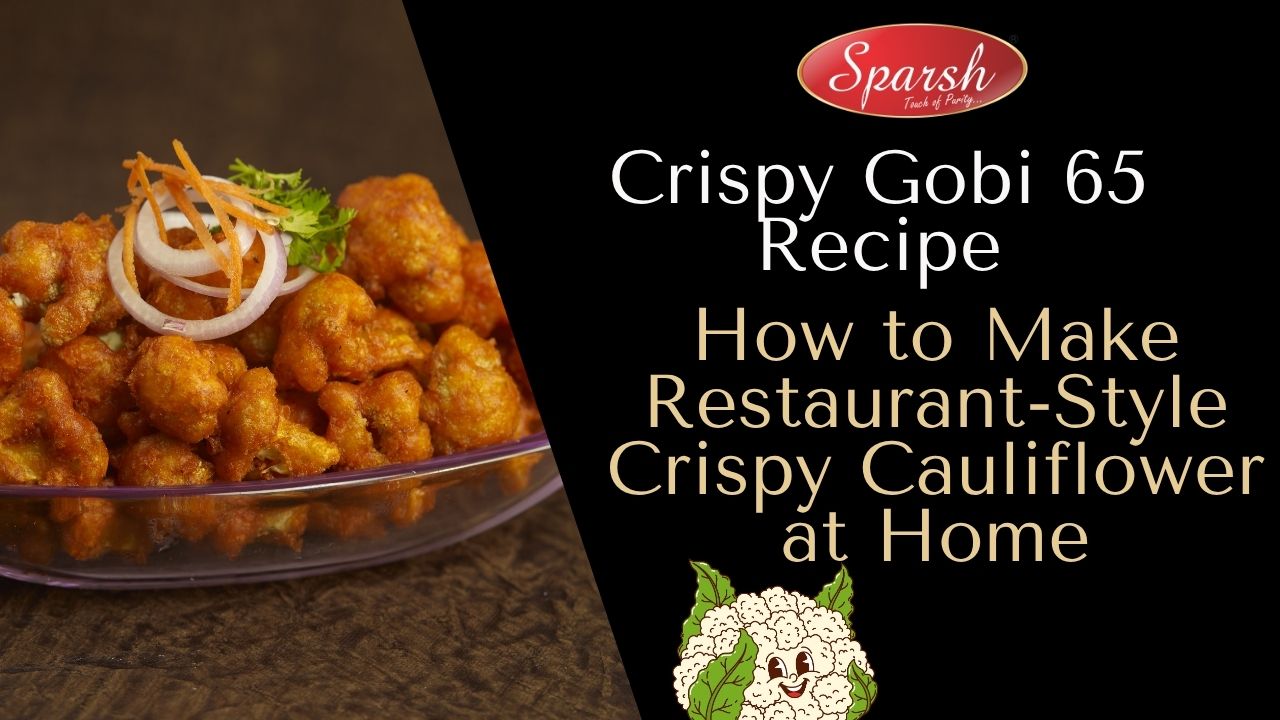
Crispy Gobi 65 Recipe — How to Make Restaurant-Style Crispy Cauliflower at Home
Gobi 65 is the kind of appetizer that disappears from the plate before you can count to five. It is perfectly crispy on the outside, soft inside, coated in a spiced, tangy glaze that sticks to your fingers, and absolutely addictive. The name “65” comes from the year it was supposedly invented (1965) at a restaurant in Bangalore, though the exact origin story varies. What matters is that it has become a staple at every Indian restaurant, wedding reception, and house party across South India — and for good reason.
The challenge with making gobi 65 at home is getting it crispy without it becoming burnt or soggy. The coating needs to be thin enough to crisp up in seconds, but thick enough to stick. The cauliflower needs to be tender inside but not mushy. The seasoning needs to be balanced — spicy but not overwhelming, tangy but not sour. In this guide, we walk you through the complete process step by step: how to choose and cut the cauliflower, the coating that guarantees crispiness, the deep frying technique that separates restaurant-quality gobi 65 from mediocre versions, and the seasoning that brings it all together.
Why Restaurant Gobi 65 Tastes So Much Better Than Homemade Versions
If you have tried making gobi 65 at home and wondered why it never tastes quite like the restaurant version, you are not alone. The difference usually comes down to three things: the cauliflower preparation, the coating technique, and the final seasoning.
The Cauliflower Preparation Problem
Most home cooks cut cauliflower into large florets and deep fry them directly. The problem: large florets take too long to cook, the outside burns before the inside is tender, and the coating stays thick instead of crisping up thin. Restaurants cut cauliflower into smaller pieces — about 2 inches long, clustered in small florets with minimal stem — which allows them to cook through in 30–40 seconds and crisp up perfectly.
The Coating Problem
A homemade batter that is too thick will turn into a heavy, doughy crust. A batter that is too thin will not coat the cauliflower evenly. Restaurants use a specific ratio of flour to water that creates a light, crispy shell that adheres perfectly. Most home recipes do not specify this ratio clearly, which is why the coating either slips off or turns into a thick, greasy layer.
The Seasoning Problem
Restaurant gobi 65 has a complex seasoning: spicy but rounded (not a sharp chilli bite), tangy from lemon or vinegar, salty, and with a hint of sweetness from the glaze. Most home recipes are either too spicy, too sour, or flat-tasting because they miss the balance. The seasoning happens in two stages — first in the batter, then in the final toss with the sauce — and both need to be right.
Our post on crispy gobi secrets explains these techniques in more detail. If you have been struggling with vegetable cooking in general, that guide covers the universal principles that apply to cauliflower, mushrooms, and paneer alike.
Ingredients for Crispy Gobi 65 — Serves 4 as an Appetizer
For the Cauliflower and Batter
500 grams fresh cauliflower — cut into small florets (about 2 inches long)
1 cup all-purpose flour (maida)
1/2 cup cornstarch — this is the secret to extra crispiness
1/4 cup rice flour (optional, adds more crispiness)
3/4 cup water — adjust as needed for batter consistency
1 teaspoon salt
1/2 teaspoon turmeric powder
1/4 teaspoon black pepper powder
1/2 teaspoon red chilli powder — or Sparsh Masala Kitchen King Masala for rounded heat
1 tablespoon lemon juice
2 cloves garlic — finely minced
1 tablespoon ginger — finely minced
Oil for deep frying — vegetable oil or groundnut oil
For the Final Seasoning and Glaze
2 tablespoons oil
2–3 green chillies — finely sliced
3–4 cloves garlic — minced
1 small onion — diced
2 tablespoons ketchup
1 tablespoon vinegar or lemon juice
1/2 teaspoon soy sauce (optional, adds umami depth)
1/2 teaspoon chilli sauce or sriracha (optional, adds heat)
1/2 teaspoon sugar — to balance the tanginess
Salt to taste
2 tablespoons spring onions — chopped (for garnish)
1 tablespoon coriander leaves — chopped (for garnish)
Sesame seeds — optional, for garnish
Optional Ingredient for Authentic Flavour
If you want the deepest, most authentic gobi 65 flavour, add 1/2 teaspoon of a good quality spice blend. Sparsh Masala’s Kitchen King Masala works beautifully in gobi 65 — it provides the rounded, complex spice flavour that restaurant versions have without any artificial additives. Add it to the batter instead of individual chilli powder and black pepper for a cleaner, more authentic taste.
Step-by-Step: How to Make Crispy Gobi 65 at Home
Step 1: Prepare the Cauliflower
Clean the cauliflower and cut it into small florets — approximately 2 inches long with minimal stem attached. The florets should be small enough to cook through quickly (30–40 seconds in hot oil) but still have enough surface area for crispiness.
Pat the cauliflower completely dry with paper towels. Any moisture on the surface will cause the oil to splatter and will prevent the coating from crisping properly.
If the florets have a lot of green leafy parts, trim them off — they can burn during frying.
Step 2: Make the Batter
In a large bowl, combine:
1 cup all-purpose flour
1/2 cup cornstarch
1/4 cup rice flour (if using)
1 teaspoon salt
1/2 teaspoon turmeric
1/4 teaspoon black pepper
1/2 teaspoon red chilli powder (or 1/2 teaspoon Kitchen King Masala)
Mix all dry ingredients thoroughly with a whisk.
Add minced ginger, minced garlic, and lemon juice to the dry mix.
Gradually add 3/4 cup water, stirring continuously. The batter should be thin but coating — it should cling to the cauliflower florets but not be as thick as cake batter. If it is too thick, add a tablespoon of water. If it is too thin, add a tablespoon of cornstarch.
The consistency should be similar to pancake batter — thinner than regular pakora batter, thicker than a crêpe batter.
Critical tip: The cornstarch is essential for crispiness. Do not skip it or reduce it. The ratio of cornstarch to flour is what creates the light, crispy shell that shatters when you bite into it.
Step 3: Heat the Oil and Test Temperature
Pour oil into a heavy-bottomed deep pan or kadai — you need at least 2 inches of oil depth.
Heat the oil on medium-high flame. To test if the oil is ready, drop a small piece of cauliflower into it. If it immediately starts sizzling and bubbles vigorously surround the piece, the oil is at the right temperature (around 180°C or 350°F). If it sinks or takes too long to float, the oil is not hot enough. If it browns in 5 seconds, the oil is too hot.
Important: Do not let the oil smoke. Smoking oil means it is too hot and will burn the outside of the gobi while leaving the inside raw.
Step 4: Coat and Fry the Cauliflower
Working in small batches (do not overcrowd the pan), dip each cauliflower floret into the batter, coating it fully on all sides.
Carefully place the coated floret into the hot oil. It should sizzle immediately and float to the surface within 5–10 seconds.
Fry for 30–40 seconds total — turn once halfway through so both sides are exposed to the oil and turn golden brown and crispy.
Use a slotted spoon to remove the fried gobi from the oil and drain it on a paper towel.
Repeat with remaining cauliflower florets in batches. Do not fry too many pieces at once — the oil temperature will drop and the gobi will become greasy instead of crispy.
Key point: The entire frying time for each floret should be 30–40 seconds maximum. If you fry longer, the coating becomes too dark and the taste turns bitter. The gobi will continue cooking slightly after you remove it from the oil due to residual heat, so it is better to remove it slightly early than slightly late.
Step 5: Make the Seasoning Sauce
- Heat 2 tablespoons of oil in a separate pan on high heat.
- Add sliced green chillies and minced garlic. Stir for 5–10 seconds until fragrant.
- Add diced onion and stir continuously for 30–40 seconds until the onion is slightly translucent but still has a slight crunch.
- Add 2 tablespoons ketchup, 1 tablespoon vinegar or lemon juice, 1/2 teaspoon soy sauce, 1/2 teaspoon chilli sauce, and 1/2 teaspoon sugar.
- Stir well to combine. The sauce should smell tangy, slightly sweet, and spicy. Taste it — it should make your mouth water slightly. This is the base flavour.
- Add salt to taste.
- Keep the pan on high heat — do not let the sauce sit and cool.
Step 6: Toss the Gobi with the Sauce
Add the warm, freshly fried gobi florets to the hot sauce pan.
Toss quickly and continuously for about 1–2 minutes, ensuring every floret is coated in the sauce.
The hot gobi will absorb the sauce flavours and the residual heat will slightly caramelize the glaze, creating a sticky, flavourful coating.
Remove from heat immediately.
Step 7: Garnish and Serve
Transfer to a serving plate.
Garnish with chopped spring onions, fresh coriander leaves, and sesame seeds (if using).
Serve immediately while hot and crispy. Gobi 65 loses its crispiness within 5–10 minutes as it sits, so serve as soon as it is ready.
Why the Coating Matters — The Science Behind Crispiness
The reason restaurant gobi 65 is so much crispier than homemade versions comes down to the batter composition and frying technique. When you fry a batter-coated vegetable, the water in the batter evaporates instantly, creating tiny air pockets in the coating. These air pockets create the characteristic crispy texture.
All-purpose flour contains gluten, which can develop into a tough, chewy texture if overmixed. Cornstarch has no gluten and produces a lighter, more delicate crispy shell. Rice flour adds another layer of crispiness because it has a coarser texture that creates more surface area for browning.
The ratio matters: too much flour and the coating is thick and doughy. Too much cornstarch and the coating is too delicate and flakes off. The ideal ratio is 2 parts flour (maida or all-purpose), 1 part cornstarch, and 1/2 part rice flour.
The water temperature also matters — cold water (from the fridge) helps the batter stay thick and crispy-coated, while warm water makes the batter thinner. Use cold water for the crispiest results.
Variations and Serving Suggestions
Manchurian-Style Gobi
Skip the final sauce toss and serve the crispy gobi with a separate Manchurian sauce on the side. The Manchurian sauce is thicker and more umami-rich (made with soy sauce, cornstarch slurry, and vegetable broth). This is closer to the Indo-Chinese gobi manchurian style served at many Indian restaurants.
Spicy Version
Add 1–2 bird’s eye chillies (whole, not sliced) to the seasoning sauce for extra heat. You can also increase the red chilli powder in the batter to 3/4 teaspoon.
Crispy Paneer 65
Crispy Mushroom 65
Cut mushrooms into 1.5-inch pieces and fry using the same technique. Our post on mushroom cooking secrets covers how to bring out maximum flavour in mushrooms, which applies here too.
Serving Options
As an appetizer with drinks — serve on toothpicks or in small bowls.As a side dish with rice and curry.Mixed into a salad with dressed greens for crunch.As a party snack in a serving platter.With a cold beverage as a street-food style snack
Conclusion
Crispy gobi 65 is not as complicated as it seems. The secret is three things: the cornstarch-based batter that creates the signature crispiness, the correct oil temperature that ensures quick, even cooking, and the tangy, spicy sauce that brings it all together. Master these three elements and you will have restaurant-quality gobi 65 on your table in 15 minutes.
The dish is best served hot, straight from the pan, with a cold beverage and good company. It disappears fast, so make extra — nobody ever complains about having more crispy gobi 65.
Frequently Asked Questions About Crispy Gobi 65
Gobi 65 and gobi manchurian are both crispy cauliflower dishes, but they are made with different sauces. Gobi 65 uses a thin, tangy sauce with ketchup, vinegar, and green chillies. Gobi manchurian uses a thicker sauce made with soy sauce, ginger-garlic paste, and a cornstarch slurry, giving it an umami-rich, Indo-Chinese flavour. The batter and frying technique are almost identical — the main difference is the final sauce. Both are delicious; gobi 65 is spicier and tangier, while manchurian is richer and umami-forward.
Technically yes, but the texture will not be the same. Air-fried gobi will be crispy on the outside but lighter and less satisfying than deep-fried. Baked gobi will be more like a roasted vegetable, not the signature crispy texture. If you want to reduce oil, you can use an air fryer at 200°C for 10–12 minutes, but accept that the texture will be different. Deep frying is the only way to get the authentic, restaurant-quality crispiness.
Crispy gobi 65 stays crispy for about 5–10 minutes after cooking. After that, it absorbs moisture from the air and the coating softens. If you need to make it ahead, fry the gobi but do not toss it in the sauce yet. Store it on paper towels at room temperature. Reheat in a hot oven (180°C) for 3–4 minutes before tossing in the hot sauce and serving immediately.
Use an oil with a high smoke point — vegetable oil, groundnut oil, or refined sunflower oil are ideal. Avoid coconut oil or olive oil, which have lower smoke points and will burn at the high temperature required for crispy gobi. Groundnut oil is traditional in South Indian cooking and gives a subtle flavour.
Yes, but thaw it completely and pat it very dry before coating and frying. Frozen cauliflower contains more moisture than fresh, so make sure to dry it thoroughly on paper towels. The texture will not be quite as crispy as fresh cauliflower, but it will still work. For the best results, use fresh cauliflower.