

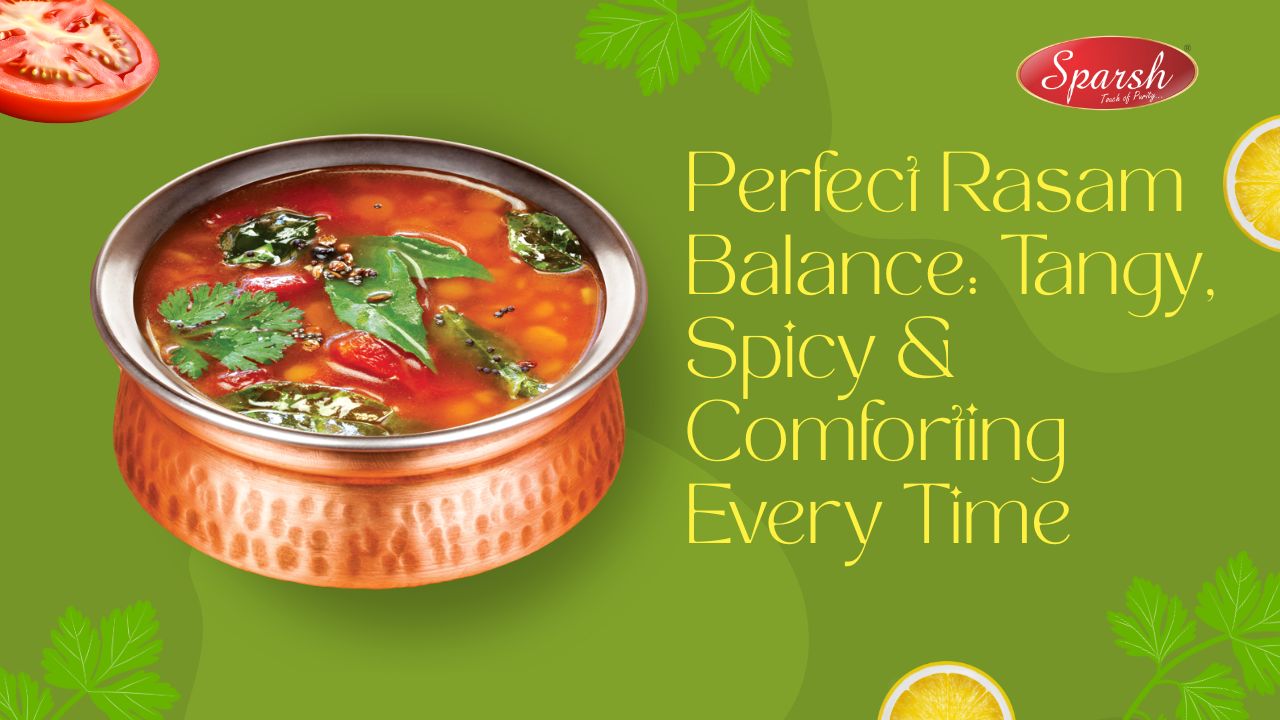
Rasam is more than a soup — it’s comfort, tradition, and healing in a bowl.
Yet many home cooks struggle with one issue: rasam that’s too sour, too spicy, watery, or flat.
A good rasam should be:
-
Gently tangy
-
Mildly spicy
-
Deeply aromatic
-
Light yet satisfying
In this blog, you’ll learn how to make rasam perfectly balanced, the common mistakes that ruin it, and a traditional home-style rasam recipe using Sparsh Masala for consistent flavour every time.
What Does “Balanced Rasam” Really Mean?
A perfectly balanced rasam has:
Sourness that refreshes, not bites
Spice that warms, not burns
Pepper aroma that lingers
Light consistency, not watery
Rasam is delicate — small errors can overpower it.
Why Rasam Often Goes Wrong
Most rasam problems come from:
Too much tamarind
Boiling rasam aggressively
Excess pepper or chilli
Poor timing of spices
Burnt or weak tempering
Rasam needs control, not force.
How to Make Rasam Perfectly Balanced
1. Tamarind Must Be Mild
Strong tamarind makes rasam harsh.
✔ Use small marble-sized tamarind
✔ Soak and extract lightly
Rasam should be tangy, not sour.
2. Pepper Is the Soul — But Don’t Overdo It
Pepper gives rasam warmth and aroma.
✔ Freshly crushed pepper preferred
✔ Balance with cumin
Too much pepper makes rasam bitter.
3. Never Let Rasam Boil Hard
This is the biggest mistake.
✔ Heat till frothy
✔ Switch off immediately
Boiling kills aroma and balance.
4. Use Tomato as a Supporting Flavor
Tomato adds mild sweetness and colour.
Do not rely on tomato alone — rasam still needs tamarind.
5. Add Rasam Masala at the Right Time
Spices added too early lose aroma.
Add Sparsh Rasam Masala:
After tamarind water simmers
Before final tempering
This preserves fragrance.
6. Tempering Should Be Gentle
Burnt mustard or garlic ruins rasam instantly.
✔ Medium heat
✔ Fresh curry leaves
✔ Pour tempering last
7. Rest Rasam for 2–3 Minutes
A short resting time allows flavours to settle.
Rasam tastes best when slightly rested, not piping hot.
Recipe: Perfectly Balanced Traditional Rasam
Ingredients
- 1 small lemon-sized tomato (crushed)
- Small marble-sized tamarind (soaked & extracted)
- ½ tsp crushed black pepper
- ½ tsp cumin powder
- 1 tsp Sparsh Rasam Masala
- Salt to taste
- 2 cups water
- Fresh coriander
For Tempering
1 tsp ghee
½ tsp mustard seeds
1 dried red chilli
Curry leaves
Method
In a pot, add tamarind water, tomato, salt, and water.
Bring to gentle simmer on medium flame.
Add pepper, cumin, and Sparsh Rasam Masala.
Heat until frothy — do not boil.
Switch off flame.
Prepare tempering separately and pour over rasam.
Rest for 2 minutes. Garnish with coriander.
Serve with hot rice or sip as soup.
Easy Rasam Variations
Pepper Rasam – Extra pepper for colds
Garlic Rasam – Add crushed garlic in tempering
Jeera Rasam – Light and digestive
Balanced rasam adapts easily to variations.
FAQ
Because of excess tamarind or boiling too long.
Yes, but tomato adds balance and colour.
Light and flowing, not thick like sambar.
A balanced blend like Sparsh Rasam Masala.
Yes, especially when mildly spiced.
Conclusion
Perfect rasam is all about restraint and balance. When tamarind, pepper, spices, and heat are handled gently, rasam becomes soothing, aromatic, and deeply satisfying. With Sparsh Masala, you get consistency and authentic flavour — ensuring every pot of rasam tastes just right.
Once you master this, rasam will never go wrong again.