
One Pot Vegetable Biryani Recipe with Sparsh Masala (No Layering, No Dum)
This one pot vegetable biryani recipe skips the usual biryani drama entirely. No soaking rice and gravy separately, no layering, no sealing the pot with dough and waiting for dum. Most weeknights don’t have room for that kind of project. This one pot vegetable biryani recipe still comes out fragrant and fluffy because the flavour is doing the work, not the technique.
We tested this version in our own kitchen using Sparsh Biryani Pulav Masala, and it’s now the recipe our team makes on nights when there’s no time to cook but everyone still wants biryani. You can watch the full method come together in this reel: Watch the One Pot Biryani Reel on Instagram — https://www.instagram.com/reel/DZkVkGmy9W8/
Why This One Pot Vegetable Biryani Recipe Works Better on Busy Weeknights
A one pot vegetable biryani cuts your prep and cleanup time by more than half compared to a layered dum biryani, without losing the aroma that makes biryani worth making in the first place.
Traditional biryani asks you to manage three things at once: rice cooked separately, a masala base cooked separately, and vegetables prepped on the side. Then everything gets layered and sealed. It’s a beautiful method, but it’s also the reason biryani rarely makes it to a Tuesday dinner table.
Cooking everything in one pot means the rice absorbs the masala directly as it cooks, instead of being layered on top of it. You get fewer vessels to wash, one flame to watch, and a dish that’s ready in under 45 minutes.
Success Tip: Use a heavy-bottomed pot or a pressure cooker with a wide base. A thin pot burns the bottom layer before the top layer is done.
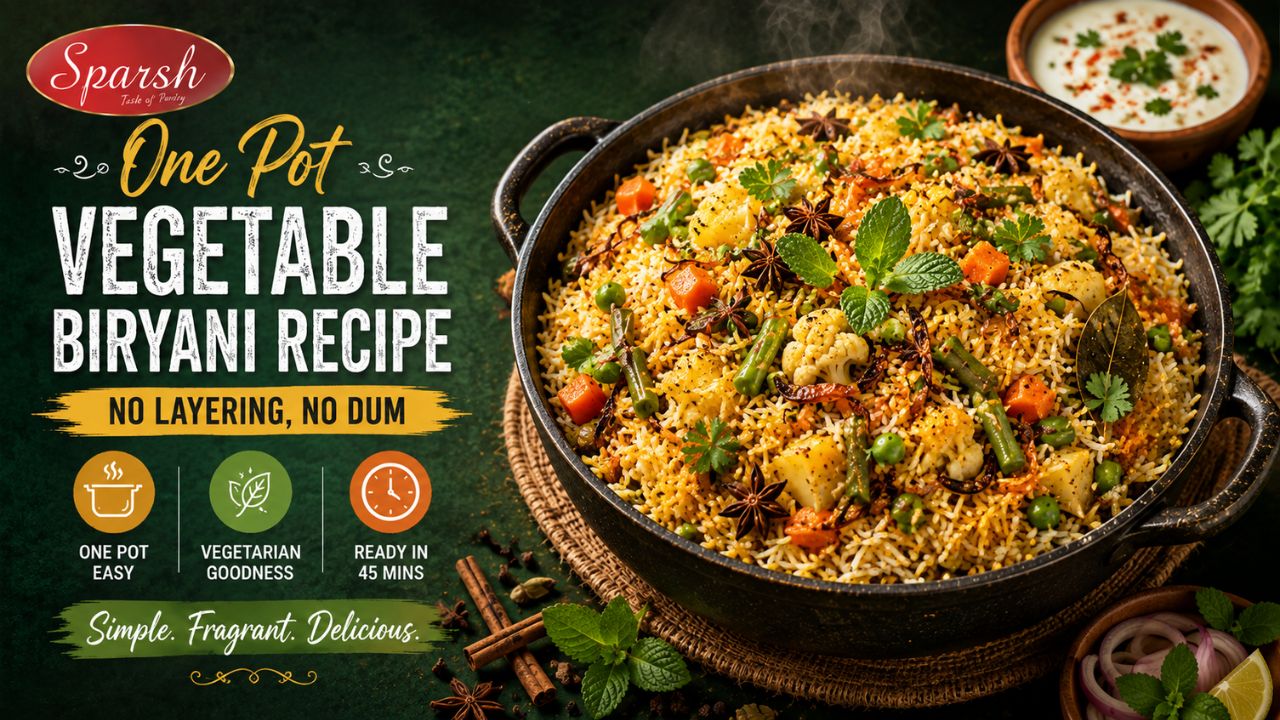
Ingredients for This One Pot Vegetable Biryani Recipe
- Basmati rice — 1.5 cups (soaked 20 minutes)
- Mixed vegetables (carrot, beans, peas, potato) — 2 cups, chopped (cauliflower works too)
- Onion, thinly sliced — 1 large
- Tomato, chopped — 1 medium
- Ginger garlic paste — 1 tbsp (Sparsh Ginger Garlic Paste)
- Sparsh Biryani Pulav Masala — 2 tbsp (the core flavour base)
- Curd (yogurt) — 3 tbsp, whisked smooth
- Mint and coriander leaves — a handful each, chopped
- Ghee or oil — 3 tbsp (ghee gives better aroma)
- Water — 2.5 cups (for 1.5 cups rice)
- Salt — to taste
Step by Step One Pot Vegetable Biryani Recipe
Getting this right comes down to one habit: sauté the masala fully before the rice goes in, so every grain cooks in flavour instead of just sitting next to it.
- Soak the rice for 20 minutes, then drain. (20 min)
- Heat ghee in a heavy-bottomed pot on medium flame. Add sliced onions and sauté until golden brown. (6-8 min)
- Add ginger garlic paste and sauté until the raw smell disappears. (1-2 min)
- Add chopped tomato and cook until soft and pulpy. (3-4 min)
- Add 2 tbsp Sparsh Biryani Pulav Masala and stir well so the oil starts to separate from the masala. This step builds the entire flavour of the dish. (2 min)
- Add the mixed vegetables, whisked curd, salt, and half the mint-coriander leaves. Mix well. (2 min)
- Add the soaked rice and gently fold it in without breaking the grains. (1 min)
- Add 2.5 cups water, bring to a boil, then cover with a tight lid and lower the flame to the lowest setting. (15-18 min)
- Turn off the flame and let it rest, covered, without opening the lid. (10 min)
- Fluff gently with a fork, garnish with the remaining mint and coriander, and serve hot.
Warning Tip: Don’t lift the lid while the rice is cooking. Every time you open it, steam escapes and the rice underneath cooks unevenly.
One Pot Vegetable Biryani Recipe vs Traditional Dum Biryani
If you’re deciding which method suits your evening, here’s how they actually compare.
| Factor | One Pot Biryani | Traditional Dum Biryani |
|---|---|---|
| Total time | 40-45 minutes | 90+ minutes |
| Vessels used | 1 pot | 3-4 (rice, gravy, layering dish) |
| Skill level | Beginner friendly | Needs layering practice |
| Flavour depth | Good, masala-forward | Deeper, slow-built |
| Best for | Weeknights | Weekend or festive meals |
Neither version is “better” on its own. One pot biryani is what you reach for on a Tuesday. Dum biryani is what you plan for on a Sunday.
What Makes the Masala Do the Heavy Lifting
A good one pot rice recipe with masala depends on the blend having enough depth to carry the dish on its own, since there’s no separate gravy to fall back on.
Sparsh Biryani Pulav Masala is built around whole spices roasted and ground the traditional Karnataka way, without relying on artificial colour to fake the look of a “restaurant style” biryani. That matters more in a one-pot method than a layered one, because the masala is in direct, constant contact with the rice for the entire cooking time rather than sitting as a top layer.
Pro Tip: If your biryani tastes flat despite using enough masala, the issue is usually undersalting, not under-spicing. Salt is what carries the masala flavour into every grain.
Storage and Reheating
One pot vegetable biryani keeps well for next-day lunchboxes if stored correctly.
Cool the biryani to room temperature before refrigerating rather than putting it in while still hot, and store it in a covered, airtight container. FSSAI’s home food safety guidance recommends keeping cooked food in closed containers and maintaining clean, well-organised storage to prevent contamination. Reheat with a splash of water on low flame or in the microwave until steaming hot throughout, which keeps the rice from drying out and ensures it’s safe to eat.
Frequently Asked Questions
1.Can I make one pot vegetable biryani in a pressure cooker?
Yes. Follow the same steps up to adding rice and water, then pressure cook for 2 whistles on medium flame. Let the pressure release naturally before opening.
2. Why does my one pot biryani turn mushy?
Mushy rice usually means too much water or rice that wasn’t soaked and drained properly. Stick to a 1:1.5 rice-to-water ratio and always drain soaked rice fully before adding it.
3.Can I add paneer or soya chunks to this recipe?
Yes, both work well. Add paneer cubes in the last 5 minutes of cooking so they stay soft, and add soya chunks along with the vegetables since they need the full cooking time to absorb flavour.
4. Is Sparsh Biryani Pulav Masala the same as garam masala?
No. Biryani Pulav Masala is a blend specifically balanced for rice dishes, while Sparsh Garam Masala is a general-purpose blend used across curries, dals, and vegetable dishes.
5. How much masala should I use for 1.5 cups of rice?
2 tablespoons of Sparsh Biryani Pulav Masala is the right amount for 1.5 cups of raw rice. Add it before the rice goes in, not after, so it coats the grains evenly while cooking.
5. Can I make this biryani vegan?
Yes. Replace ghee with oil and skip the curd, or substitute it with 2 tablespoons of coconut milk for a similar tang and richness.
Watch It Come Together
If you’d rather see the method than read it, our team walked through this exact one pot vegetable biryani recipe on Instagram. Watch the reel here: https://www.instagram.com/reel/DZkVkGmy9W8/ and follow along step by step.
Conclusion
The right masala powder for fish curry makes all the difference between a fish curry that impresses and one that disappoints. Understanding which spices matter — turmeric for deodorising and colour, Byadgi chilli for authentic Karnataka red, coriander and cumin for body and depth, black pepper for heat, fennel for sweetness, and ginger for aroma — gives you the knowledge to cook fish curry with genuine confidence.
Sparsh Fish Kabab Masala brings all of these spices together in a carefully crafted blend formulated specifically for seafood. Made with 100% pure Karnataka ingredients, no artificial colours, and no preservatives — it delivers authentic coastal Karnataka fish curry flavour in every cook.
Whether you are making a traditional Karnataka fish curry, a crispy pan-fried fish fry, or a restaurant-style fish tikka — Sparsh Fish Kabab Masala gives you the foundation to make it right every time.
Recipe developed and tested by the Sparsh Masala kitchen team, Karnataka. Last updated August 10, 2026.