
Top 10 Indian Masala Powders Every Home Cook Needs
Every Indian kitchen has its own personality — shaped by region, family tradition, and what gets cooked most often. But there is a universal foundation that runs through nearly all of them: a collection of masala powders. These are the blends that transform simple ingredients into flavourful, complex dishes. They are the difference between food that tastes flat and food that tastes like home.
The confusion for most home cooks is not whether they need masala powders — they clearly do. The confusion is which ones to buy, in what quantities, and how to tell the difference between a mediocre blend and an exceptional one. Walk into any grocery store and you will see dozens of options, each promising authenticity, each claiming to be the best. How do you choose?
In this guide, we break down the top 10 Indian masala powders that every home cook needs in their pantry — not all of them, not obscure regional blends, but the 10 that cover 90% of everyday Indian cooking. We explain what each masala is, which dishes use it, how to identify quality, where to buy it, and how to store it for maximum freshness. By the end, you will have a complete spice pantry and the knowledge to use it well.
Why These 10 Masala Powders Are Non-Negotiable for Every Home Cook
Before we list them, let us explain why these specific 10 matter. A well-stocked masala pantry is the foundation of Indian cooking. It allows you to make authentic regional dishes, improves flavour consistency, reduces cooking time, and makes you a better, more confident cook.
The masalas we have included are not obscure. They are not regional specialties that only work in one type of cuisine. They are the foundational blends that appear across multiple regions, multiple dishes, and multiple cooking styles. Master these 10 and you can cook virtually any Indian dish authentically.
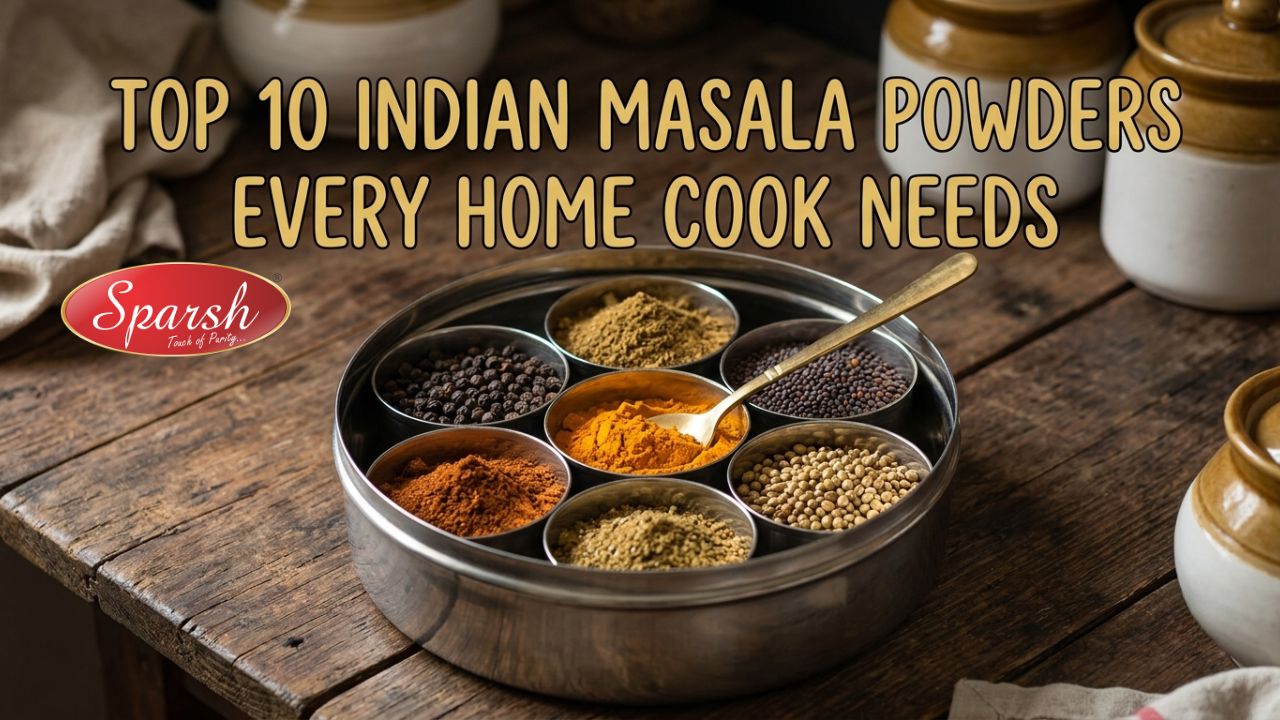
The Top 10 Indian Masala Powders Every Home Cook Needs
1. Sambar Powder — The South Indian Essential
Sambar powder is the most essential spice blend in South Indian cooking. It is used in sambar (a tangy, spiced vegetable stew), but also in other South Indian dishes. A good sambar powder contains coriander, cumin, fenugreek, chana dal, toor dal, red chilli, and roasted coconut — each ingredient carefully balanced so none overpowers the others.
What dishes use it: Sambar, vegetable curries, lentil-based gravies
Why it is essential: South Indian cooking is incomplete without sambar powder. It appears in breakfast dishes, lunch meals, and even some snacks.
Quality indicator: Look for roasted coconut in the ingredient list — this is what separates authentic sambar powder from cheap versions. The smell should be toasted and complex, not raw or chemical.
Sparsh Masala Sambar Powder uses Byadgi chilli from Haveri, roasted coconut, and no artificial additives. Read our complete sambar powder Karnataka guide for sourcing tips and usage instructions.
2. Garam Masala — The Warming Spice Blend
Garam masala is used across India in both North and South Indian cooking. It is a blend of warming spices — cardamom, cinnamon, cloves, black pepper, cumin, coriander, bay leaves — designed to be added at the end of cooking. It is a finishing spice, not a base spice.
What dishes use it: Curries, rice dishes, lentals, meat preparations, sometimes desserts
Why it is essential: Garam masala is the most versatile masala powder. Nearly every savoury dish benefits from a pinch added at the end for aromatic warmth and complexity.
Quality indicator: Garam masala should smell intensely aromatic and warm. If it smells flat or slightly musty, the spices are stale. Premium garam masala uses whole roasted spices, not pre-ground powder.
For a deeper understanding of this blend, read our post on how to use garam masala correctly.
3. Rasam Powder — The Peppery South Indian Blend
Rasam powder is the spice blend for rasam, a thin, peppery, tangy South Indian soup. It is made primarily from black pepper, cumin, coriander, and dried chillies — and it should have absolutely no roasted coconut (unlike sambar powder). The emphasis is on pepper heat and spice, balanced by tamarind and dal.
What dishes use it: Rasam, sometimes in soups and light gravies
Why it is essential: Rasam is a daily dish in South Indian homes, especially during monsoon season. A good rasam powder makes the difference between a balanced, warming rasam and one that tastes harsh or incomplete.
Quality indicator: Rasam powder should smell peppery and hot, not sweet or nutty (which would indicate coconut or other fillers). The texture should be fine and uniform.
If your rasam often turns out flat or overly sour, read our guide on why rasam turns watery — the masala blend is usually part of the solution.
4. Biryani Masala — The Layered Rice Spice
Biryani masala is formulated for biryani and pulav — layered rice dishes. Unlike garam masala, biryani masala contains fennel seeds and star anise, which add a subtle sweet, aromatic note. It is added both in the marinade and during the layering stage, so it needs to work in both stages.
What dishes use it: Biryani, pulav, layered rice dishes, sometimes meat curries
Why it is essential: If you cook biryani regularly, a dedicated biryani masala is non-negotiable. It is specifically formulated for the complexity that biryani requires.
Quality indicator: Biryani masala should contain visible whole spices — cardamom, cinnamon, cloves — not just powder. The aroma should be warm, slightly sweet, and complex.
For a complete breakdown of how to choose the right masala for biryani, read our guide on which masala is best for biryani.
5. Curry Powder — The Everyday Seasoning Blend
Curry powder is a British-era blend that remains useful in Indian kitchens despite not being a traditional regional spice. It is dominated by turmeric, with coriander, cumin, fenugreek, and chilli. It is added early in cooking and builds the base flavour of curries and gravies.
What dishes use it: Regular curries, gravies, rice dishes, sometimes soups
Why it is essential: While not traditional, curry powder is practical for everyday cooking. It simplifies the process of building curry flavour without needing multiple individual spices.
Quality indicator: Curry powder should be golden yellow from turmeric, not orange (which indicates artificial colour). The smell should be earthy and balanced, not bitter.
Note: For South Indian cooking specifically, dish-specific masalas like sambar and rasam powder are superior to generic curry powder. Read our comparison of garam masala vs curry powder for more context.
6. Bisibele Bath Powder — The Karnataka Classic
Bisibele Bath is a Karnataka dish — rice cooked with lentils, vegetables, and spices in one pot. The masala for bisibele bath is unique: it contains Marathi Mokku (Stone Flower), roasted coconut, Byadgi chilli, and a precise blend of other spices. It is complex and regionally specific.
What dishes use it: Bisibele Bath, sometimes in other Karnataka vegetable curries
Why it is essential: If you cook Karnataka food regularly, bisibele bath powder is essential. It is nearly impossible to make authentic bisibele bath without it — the Marathi Mokku especially is hard to source separately.
Quality indicator: Look for Marathi Mokku listed as an ingredient. The powder should smell complex, slightly earthy, and nutty from the roasted coconut.
For the complete story on how to use bisibele bath powder, read our bisibele bath recipe from Karnataka.
7. Vangibath Powder — The Brinjal Rice Blend
Vangibath is a Karnataka rice dish made with brinjal (eggplant). The masala is specifically formulated for the brinjal to absorb spice evenly and for the rice to have the right flavour balance. It is different from both sambar powder and bisibele bath powder.
What dishes use it: Vangibath, sometimes in other rice and vegetable dishes
Why it is essential: If you cook South Indian rice dishes regularly, having a dedicated vangibath powder means perfect results every time instead of guessing.
Quality indicator: Vangibath powder should be aromatic and balanced, not overly spicy. It should contain roasted coconut for body.
For detailed usage instructions, read our vangibath powder recipe and authentic Indian flavour guide.
8. Kitchen King Masala — The All-Purpose Blend
Kitchen King Masala is an all-purpose spice blend used across North India. It is added to dal, vegetables, rice, and sometimes snacks. It is versatile, convenient, and meant to add a boost of flavour to simple dishes without needing other spices.
What dishes use it: Lentils, vegetables, rice, snacks
Quality indicator: Kitchen King should smell balanced and warm, not overly spicy or bitter. It should have no artificial colour or preservatives.
9. Chaat Masala — The Tangy Finishing Blend
Chaat masala is a tangy, slightly salty spice powder used on snacks, fruits, and light dishes. It contains dried mango powder (amchur), cumin, coriander, black salt, and chilli. It is sprinkled on finished dishes for brightness and tang.
What dishes use it: Chaat (street food snacks), fruits, yogurt dishes, salads
Quality indicator: Chaat masala should be slightly tangy when tasted (from the amchur) and have a light colour, not dark brown.
10. Specialty Masalas — Chicken Kabab, Paneer Masala, Fish Masala
Beyond the foundational 9, many cooks keep specialty masalas for specific proteins. Chicken Kabab Masala, Paneer Masala, and Fish Masala are examples. These are optional unless you regularly cook these dishes, but they significantly improve results.
What dishes use them: Chicken kababs, paneer curries, fish preparations, meat dishes
Quality indicator: Each specialty masala should be made with whole roasted spices and no artificial additives.
Sparsh Masala makes Chicken Kabab Masala as part of their non-veg masala range. Explore the complete range on the Sparsh Masala shop.
How to Choose Quality Masala Powders
Not all masala powders are equal. The difference between mediocre and excellent is usually visible and olfactory.
Check the Ingredient List
Quality masala powders list ingredients by name — coriander, cumin, fenugreek, etc. — not vague terms like “spices” or “condiments.” Avoid masalas listing “natural flavour” or “permitted food colour.”
Smell It
Quality masala powder should smell intense, aromatic, and complex. Stale or low-quality masala smells flat, musty, or chemical. If it has no smell, it has lost potency and is not worth buying.
Look for Whole Spices
Premium masala powders contain visible pieces of whole spices — cardamom husks, cinnamon bark, clove fragments. This indicates the masala was ground from whole spices, not pre-ground powder.
Check for Regional Authenticity
Authentic South Indian masalas use Byadgi chilli from Karnataka, not generic red chilli. Karnataka masalas contain Marathi Mokku where appropriate.
Check the Manufacturing Date
Quality brands print manufacturing dates. Masala powder is best within 6 months of manufacturing. Avoid packages with no date or old dates.
Building Your Masala Pantry — A Practical Strategy
If starting from scratch, buying all 10 at once is neither practical nor necessary.
Phase 1: The Essential 4 (Start Here)
These cover 70% of everyday Indian cooking:
Garam Masala — for finishing curries and rice dishes
Sambar Powder — for South Indian cooking
Curry Powder — for quick everyday curries
Chaat Masala — for snacks and light dishes
Budget: Around 300–500 INR for quality versions
Phase 2: Add Region-Specific Blends (If You Cook That Cuisine)
If you cook South Indian food regularly:
Rasam Powder, Bisibele Bath Powder, Vangibath Powder
Budget: Around 200–300 INR for all three
Phase 3: Specialized Blends (As Needed)
Add these only if you regularly cook the associated dishes: Biryani Masala, Kitchen King Masala, Specialty masalas.
Frequently Asked Questions
1. Do I really need all 10 masala powders?
You can start with the essential 4 (garam masala, sambar powder, curry powder, chaat masala) and add others as you explore different cuisines. Each masala is formulated for specific dishes — using one in place of another produces wrong flavours.
2. What is the difference between store-bought and homemade masala?
Homemade masala is fresher and more aromatic. Premium store-bought masala made from whole roasted spices and no additives is nearly as good. Cheap store-bought masala is significantly inferior.
3. How long do masala powders last?
Most stay fresh for 6–12 months in proper airtight storage. Flavour peaks in the first 3 months. If the masala smells flat or musty, replace it.
4. Can I substitute one masala for another?
Sometimes, but results will differ. Garam masala can sometimes substitute for mixed spices. But sambar powder cannot replace rasam powder — they produce completely different flavours.
5. Which masala is best for a beginner?
Start with garam masala and curry powder — these work in the widest variety of dishes and are most forgiving for beginners.
CONCLUSION
The top 10 Indian masala powders are the foundation of authentic Indian cooking. With these masalas in your pantry and knowledge of how to use them, you can cook virtually any Indian dish with confidence.
Start small. Build your collection gradually. Invest in quality. Store properly. Sparsh Masala offers the complete range of top 10 Indian masala powders — each made with authentic Karnataka ingredients, whole roasted spices, and zero artificial additives.