
Difference Between Biryani Masala and Garam Masala
If you have ever stood in front of your spice rack holding two jars — one labelled biryani masala and one labelled garam masala — and wondered which one to use, you are not alone. Both are Indian spice blends. Both smell aromatic. Both contain cardamom, cinnamon, and cloves. But they are fundamentally different, and using one in place of the other will noticeably change your dish.
The confusion is understandable. Both masalas sound similar. Both appear in recipes without much explanation. Both warm the palate and smell like festive Indian cooking. But understanding the difference between biryani masala and garam masala is the key to cooking Indian food authentically and confidently. Get this right and your biryani tastes deep and layered. Get it wrong and your biryani tastes flat and one-dimensional.
In this guide, we break down exactly how these two masalas differ — ingredients, flavour profile, when to add them, which dishes call for which masala, and how to identify quality versions of each.
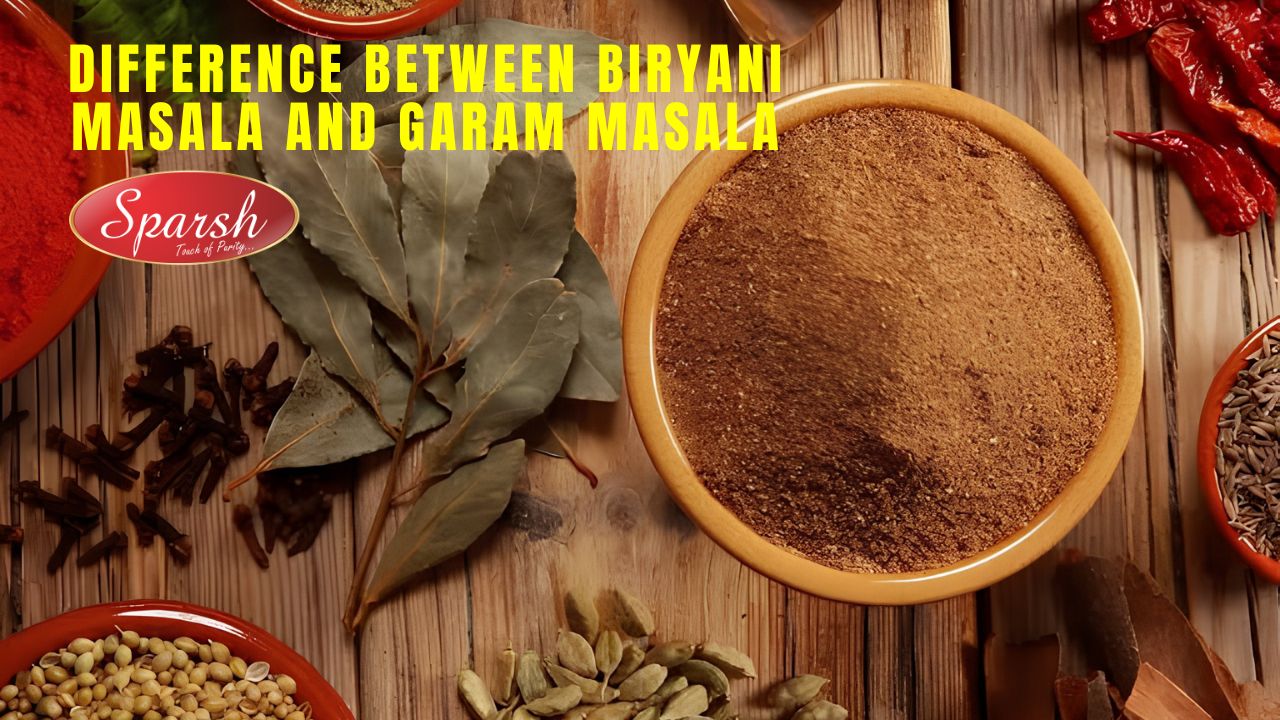
What Is Garam Masala?
Garam masala translates to “hot spices” — not hot in the sense of chilli heat, but hot in the sense of warming. According to Ayurvedic medicine, garam masala raises the body’s internal temperature. The spices chosen for garam masala are those with high essential oil content and warming properties.
1. Ingredients in Garam Masala
A traditional garam masala contains:
Green cardamom — for floral, sweet, aromatic notes
Black cardamom — for smoky, intense depth
Cinnamon or cassia bark — for warmth and subtle sweetness
Cloves — for strong, warm, slightly numbing sensation
Black pepper — for mild heat and sharp aroma
Cumin — for earthy base note
Coriander — for subtle sweetness
Bay leaves — for background aroma
Nutmeg or mace — optional, for additional warmth
The exact proportions vary by region and brand, but these are the core ingredients. Notice what is NOT in this list: fennel seeds, star anise, turmeric, or fenugreek. These absences become important when comparing to biryani masala.
2. Flavour Profile of Garam Masala
Garam masala tastes warm, complex, and aromatic. The flavour is rounded and deep, not sharp or one-dimensional. It has a slightly sweet undertone (from cinnamon and cardamom), warmth from cloves and black pepper, and earthiness from cumin. The overall impression is elegant and refined.
3. When to Add Garam Masala
This is critical: garam masala is a finishing spice. It is added in the last 1–2 minutes of cooking, or even after the dish is plated. The aromatic compounds in garam masala are volatile — they break down quickly under sustained heat. Adding garam masala at the beginning of cooking destroys the fragrance that makes it valuable.
If you have been using garam masala as a base spice (adding it at the beginning), this explains why your dishes taste dull and one-dimensional. Read our complete guide on how to use garam masala correctly for step-by-step timing instructions.
4. What Is Biryani Masala?
Biryani masala is a spice blend formulated specifically for biryani and pulav — layered rice dishes where the spices need to infuse the rice, meat, and vegetables during slow cooking. It is not a finishing spice. It is a cooking spice that goes in early and saturates the dish.
5. Ingredients in Biryani Masala
A traditional biryani masala contains:
Coriander seeds — the base, provides sweetness and body
Cumin seeds — earthy, warming flavour
Fennel seeds — adds subtle sweet, licorice-like note (KEY DIFFERENCE)
Green and black cardamom — floral (green) and smoky (black)
Cinnamon or cassia bark — warming, slightly sweet
Cloves — strong, warming, aromatic
Black pepper — for mild heat
Star anise — for subtle sweet, complex aroma (KEY DIFFERENCE)
Bay leaves — subtle background aroma
Byadgi chilli or Kashmiri chilli — for natural red colour and mild heat
Mace and nutmeg — optional, adds depth
The two critical differences from garam masala are fennel seeds and star anise. These two ingredients give biryani masala its distinctive sweet, aromatic character that garam masala lacks.
6. Flavour Profile of Biryani Masala
Biryani masala tastes sweet, aromatic, and complex. The fennel and star anise add a subtle licorice-like sweetness that is signature to biryani. The flavour is less sharp than garam masala — more rounded and subtle, designed to complement rice and meat without overpowering them. The cardamom, cinnamon, and cloves provide warmth in the background.
7. When to Add Biryani Masala
Biryani masala is added in two stages: first in the marinade (mixed with yogurt and spices), then during the layering stage (sprinkled between rice layers). It cooks into the dish during the slow-steam (dum) process, infusing all the components.
This is opposite to garam masala, which is added at the very end.
Key Differences Between Biryani Masala and Garam Masala
Now let us put them side by side to see exactly how they differ.
Ingredient Differences
Garam masala does NOT contain: fennel seeds, star anise, turmeric, or chilli
Biryani masala DOES contain: fennel seeds, star anise, sometimes roasted coconut, and chilli for colour
These ingredient differences create completely different flavour profiles.
Flavour Differences
Garam masala is warm, slightly sharp, and aromatic — designed for finishing and adding complexity to a completed dish.
Biryani masala is sweet, aromatic, and layered — designed for cooking into a dish from the beginning and saturating every component.
Heat Level Differences
Garam masala has warmth from black pepper and cloves but very little chilli heat.
Biryani masala often contains Byadgi or Kashmiri chilli for natural colour and mild heat.
Timing Differences
Garam masala is added in the last 1–2 minutes of cooking, after the dish is mostly done.
Biryani masala is added in the marination (early) and during layering (middle of cooking).
Usage Scope
Garam masala is used in countless Indian dishes — dal, vegetables, meat curries, rice dishes, sometimes even desserts.
Biryani masala is used primarily in biryani and pulav. It is too sweet and specific for general curry cooking.
Can You Use Garam Masala Instead of Biryani Masala?
This is the most common question. The answer is technically yes, but the results will be noticeably different and inferior.
If you use only garam masala in your biryani, the dish will taste:
Fragrant and warm (which is good)
Lacking the sweet, licorice-like notes that signature biryani has
Flatter and less layered (because you added it at the wrong time)
Missing the natural red colour (because garam masala has no chilli)
The result is fragrant rice that tastes like a spiced rice dish, not authentic biryani. People who have eaten restaurant biryani will notice the difference immediately.
If You Must Substitute
If you truly have no biryani masala available and you must cook biryani, you can:
Add 2–3 teaspoons garam masala in the marination stage
Add 1–2 teaspoons of individual spices (whole or ground) during the layering — extra cardamom, cinnamon pieces, cloves
Add red chilli powder or Kashmiri chilli powder for colour
Add a pinch of fennel seeds if you have them
This approximates biryani masala, though the result will still not be authentic. Better option: make biryani masala at home if you have whole spices. It takes 20 minutes. Read our guide on how to make biryani masala at home for step-by-step instructions.
Can You Use Biryani Masala Instead of Garam Masala?
Yes, but again, with caveats.
Biryani masala is too sweet and layered for everyday curries. If you use it as a finishing spice (the way garam masala is used), your curry will taste overly aromatic, slightly sweet, and not authentically spiced. It will not taste wrong necessarily, but it will not taste right either.
You can use biryani masala in meat curries or rich gravies where the extra sweetness and aromatics blend in better. But for dal, light vegetables, and everyday dishes, garam masala is the better choice.
Which Masala Is Best for Your Cooking?
Use Garam Masala If You Cook:
- Everyday curries and gravies
- Dal and lentil dishes
- Vegetable curries
- Rice dishes other than biryani
- Meat curries that need finishing warmth
- Snacks and light preparations
- Basically any dish where you want aromatic warmth added at the end.
Use Biryani Masala If You Cook:
- Biryani regularly
- Pulav and layered rice dishes
- Rich meat curries where the masala is cooked in
- Anything that needs the sweet, fennel-forward flavour profile.
- If you cook Indian food regularly, you should have both in your pantry.
- They are not interchangeable, and having both gives you flexibility and authenticity.
How to Choose Quality Versions of Each Masala
Quality Garam Masala
Should smell intensely aromatic and warm — not flat or musty
Should contain visible whole spices (cardamom husks, cinnamon pieces, clove fragments)
Should have no artificial colour or preservatives
Should have a manufacturing date that is recent (within 6 months)
Sparsh Masala Garam Masala uses whole roasted spices and no artificial additives.
Quality Biryani Masala
Should smell warm, sweet, and aromatic — with a noticeable fennel/star anise note
Should contain visible whole spices
Should list Byadgi or Kashmiri chilli as an ingredient (not artificial colour)
Should have a recent manufacturing date
Sparsh Masala Biryani Pulav Masala is made with authentic Karnataka ingredients and traditional roasting methods.
Frequently Asked Questions
1. Which masala is better — biryani masala or garam masala?
Neither is “better” — they are designed for different purposes. Garam masala is better for finishing curries and everyday cooking. Biryani masala is better for biryani and pulav. Having both in your pantry is ideal. If you only cook biryani occasionally, garam masala is the more versatile choice.
2. Can I make biryani masala and garam masala at home?
Yes, both can be made at home using whole spices, a pan for roasting, and a grinder. Homemade masala is fresher and more aromatic than most store-bought versions. Biryani masala takes about 20 minutes. Garam masala takes about 15 minutes. For detailed instructions, read our guide on how to make biryani masala at home — the same principles apply to garam masala.
3. What is the difference in price between biryani masala and garam masala?
Both typically cost the same — around 80–150 INR per 100 grams depending on brand quality. Premium versions from quality brands like Sparsh Masala cost slightly more but deliver better flavour and freshness.
4. How long do biryani masala and garam masala stay fresh?
Both stay fresh for 6–12 months in proper airtight storage away from heat and light. Flavour peaks in the first 3 months. If the masala smells flat or musty, it has degraded and should be replaced.
5. Which masala should a beginner start with?
Start with garam masala because it is used in more dishes and is more forgiving. Once comfortable with garam masala, add biryani masala if you cook biryani regularly.
CONCLUSION
The difference between biryani masala and garam masala comes down to ingredients, timing, and purpose. Garam masala is a finishing spice — warm, aromatic, added at the end. Biryani masala is a cooking spice — sweet, layered, added early and throughout. They are not interchangeable.
If you are serious about cooking Indian food authentically, have both in your pantry. Use garam masala for everyday curries and dishes that need finishing warmth. Use biryani masala for biryani, pulav, and layered rice dishes. This distinction alone will noticeably improve your cooking.
Sparsh Masala offers both garam masala and biryani pulav masala — each made with authentic ingredients and zero artificial additives. Explore the complete masala range on the Sparsh Masala shop.