Kashmiri Chilli Powder vs Normal Chilli Powder: Which One Should You Use?
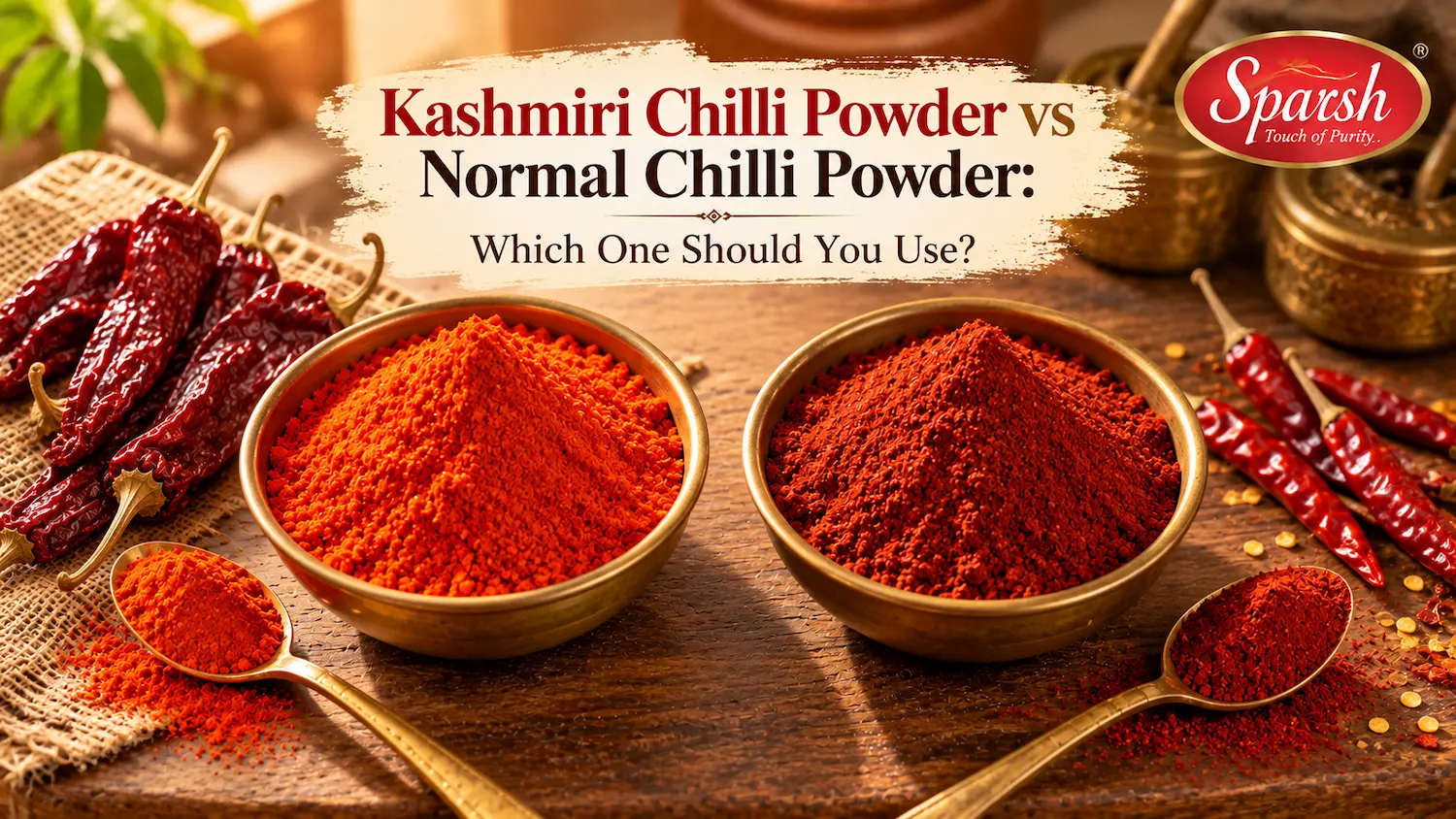
Kashmiri chilli powder vs normal chilli powder comes down to one simple trade-off: colour versus heat. Kashmiri chilli powder gives dishes that deep, restaurant-style red without overwhelming spice, while normal chilli powder brings the heat first and the colour second. Most kitchens genuinely need both, not one as a replacement for the other, since they solve different problems.
This confusion comes up constantly, especially for home cooks trying to recreate restaurant-coloured curries without turning the dish painfully spicy in the process.
Pro Tip: If a recipe calls for "chilli powder" without specifying which type, and the dish is meant to look vibrant red (like a curry or tandoori marinade), it almost always means Kashmiri chilli powder, not regular.
The Core Difference: Heat, Not Just Name
Wikipedia's entry on Kashmiri red chilli notes that the variety is known for its mild heat and marketed under names like Kashmiri mirch and Kashmiri laal mirch, prized specifically for the deep red colour it imparts to dishes rather than for pungency. This is the opposite priority of most regular chilli powders, which are typically made from hotter chilli varieties bred for heat first.
Sparsh Kashmiri Chilli Powder reflects this exactly, mildly hot with a distinct bright red colour, while Sparsh Chilli Powder is made for a sharper, more direct heat with a less pronounced colour payoff. If you want a deeper look at what makes this spice work the way it does, we've covered it in detail in our full guide to Sparsh Kashmiri Chilli Powder.
Success Tip: If you want colour and heat together, use both in the same dish, Kashmiri for the base colour and a smaller amount of regular chilli powder to bring the heat up to your preference.
Side-by-Side Comparison
| Factor | Kashmiri Chilli Powder | Normal Chilli Powder |
|---|---|---|
| Heat level | Mild | Medium to hot |
| Colour payoff | Deep, vibrant red | Moderate, less vivid |
| Best for | Curries, tandoori marinades, garnish | Everyday cooking, pickles, dry masalas |
| Flavour profile | Slightly sweet, earthy | Sharper, more pungent |
| Typical use quantity | Can be used generously without overpowering | Used more conservatively due to heat |
| Common dishes | Butter chicken, tandoori dishes, Kashmiri-style curries | Sambar, curries, everyday tempering |
When to Use Kashmiri Chilli Powder
Reach for Kashmiri chilli powder whenever a dish needs visual appeal more than raw heat, tandoori marinades, butter chicken, paneer tikka, or any curry you want to look rich and red without making it difficult to eat for people with a lower spice tolerance.
It's also the better choice when a recipe already has enough heat from other ingredients, like green chillies or black pepper, and just needs colour to finish the dish properly. Using regular chilli powder in that situation often pushes a dish past the point most people can comfortably enjoy.
Warning Tip: Kashmiri chilli powder isn't "no heat." It's mild, not heatless. Using large quantities, assuming it's purely for colour, can still add noticeable warmth to a dish.
When to Use Normal Chilli Powder
Normal chilli powder is the better choice for everyday cooking where heat is part of the point, dishes like authentic rasam, sambar made with a well-balanced sambar masala, dry vegetable preparations, pickles, and most tempering-based dishes where a sharper kick is expected.
It's also generally the more cost-effective option for high-volume cooking, since Kashmiri chilli, grown specifically in the Kashmir valley, commands a premium price compared to chilli varieties grown more widely across India.
A Quick Way to Remember the Difference
If you think of chilli powder on a spectrum from "for colour" to "for heat," Kashmiri chilli powder sits closer to the colour end, and normal chilli powder sits closer to the heat end. Neither is strictly better, they're built for different jobs in the same kitchen.
Pro Tip: Store both types in airtight containers away from direct sunlight. Chilli powder's colour, Kashmiri especially, fades noticeably faster when exposed to light and heat over time.
Frequently Asked Questions
Can I substitute Kashmiri chilli powder for normal chilli powder in a recipe?
Yes, but the dish will turn out noticeably milder and more vividly coloured. If the recipe depends on real heat, you may need to add a small amount of regular chilli powder or fresh green chilli alongside it.
Is Kashmiri chilli powder the same as paprika?
They're similar in that both are mild and used primarily for colour, but Kashmiri chilli powder has a slightly different flavour profile and is specifically tied to the Kashmiri red chilli variety, while paprika is typically made from a different pepper variety grown outside India.
Why does restaurant curry look so much redder than homemade curry?
This is almost always Kashmiri chilli powder, used generously since it doesn't add overwhelming heat, combined with a properly cooked tomato-onion base that restaurants typically simmer longer than most home cooks have time for.
Does Kashmiri chilli powder have less nutritional value than regular chilli powder?
Both are nutritionally similar as spices used in small quantities, the difference lies mainly in heat level and colour intensity, not meaningful nutritional differences at the amounts typically used in cooking.
Can I mix Kashmiri and normal chilli powder together?
Yes, this is actually a common technique for getting both good colour and a controlled heat level, adjusting the ratio based on how spicy you want the final dish to be.
Which chilli powder is better for biryani?
Kashmiri chilli powder is generally preferred for biryani when a vibrant colour is wanted without excessive heat, though some recipes use a small amount of regular chilli powder alongside it for additional warmth.
Conclusion
Kashmiri chilli powder vs normal chilli powder isn't really a competition, they're two different tools for two different jobs. Sparsh Kashmiri Chilli Powder earns its place for colour-forward dishes like curries and tandoori marinades, while Sparsh Chilli Powder stays the go-to for everyday cooking where real heat is part of the dish, including a properly made rasam or sambar. Most well-stocked kitchens genuinely benefit from keeping both on hand.
Shop Sparsh Kashmiri Chilli Powder Shop Sparsh Chilli Powder