
Easy Lemon Rice Recipe: Authentic South Indian Chitranna Ready in 20 Minutes
There are days when the fridge has leftover rice, the clock says 15 minutes to lunchtime, and you need something that is quick, delicious, and satisfying.
That is exactly when Lemon Rice — or as it is called in Karnataka, Chitranna (ಚಿತ್ರಾನ್ನ) — earns its place as one of South India’s most beloved dishes.
Bright yellow from turmeric, tangy from fresh lemon, aromatic from a crackling mustard seed tadka, and textured with crunchy peanuts and golden cashews — Chitranna is not just a quick meal. It is a flavour experience that takes less than 20 minutes to put together and tastes like it took much longer.
In this complete guide you will learn the authentic Karnataka-style Chitranna recipe, the exact spice ratios, the tadka technique that makes all the difference, common mistakes to avoid, and pro tips for making lemon rice that actually tastes like the kind you get at Karnataka temples and traditional homes.
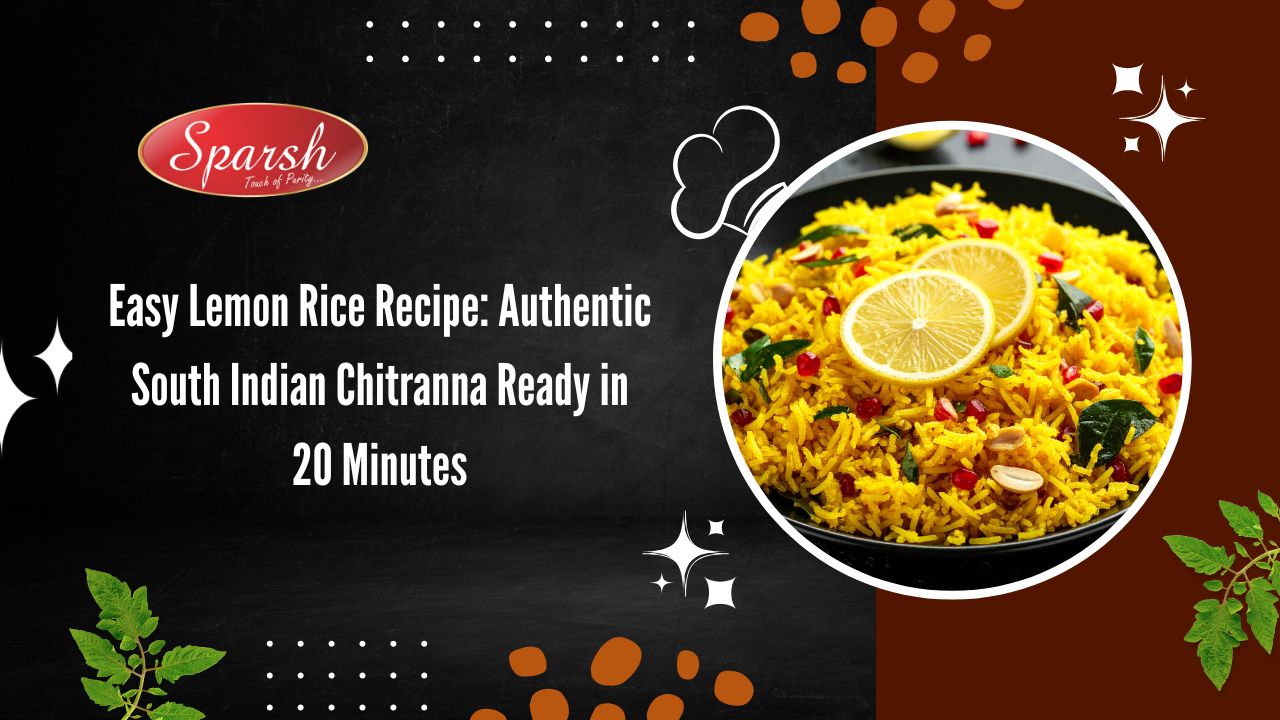
What Is Lemon Rice? The Story Behind Karnataka's Chitranna
Chitranna literally means “colourful rice” in Kannada — chitra meaning colourful and anna meaning rice. The name comes from the vibrant yellow colour that turmeric gives the dish combined with the green of curry leaves and the red of dried chillies.
Lemon Rice has deep roots in Karnataka’s food tradition. It has been a temple prasadam — a sacred food offering — for centuries in South Indian temples including the famous Udupi Krishna Temple. On festival days like Ugadi, Ram Navami, and Dasara, Chitranna is one of the first dishes prepared in Karnataka homes.
What makes Karnataka Chitranna different from lemon rice made in other states:
| Feature | Karnataka Chitranna | Other Versions |
|---|---|---|
| Souring agent | Fresh lemon juice — added off heat | Sometimes lime or dried mango powder |
| Nuts | Both peanuts and cashews | Usually only one or neither |
| Tempering oil | Groundnut oil or coconut oil | Various oils |
| Chilli type | Combination of green chilli and dried red chilli | Usually only one type |
| Lentils in tadka | Chana dal and urad dal — both | Often skipped |
| Ginger | Fresh grated ginger in tadka | Often omitted |
| Asafoetida | Always present | Sometimes skipped |
This combination of ingredients — particularly the double lentil tadka, double nut texture, double chilli heat, and fresh lemon added off heat — is what gives Karnataka Chitranna its signature layered flavour that a simple lemon-rice recipe cannot replicate.
Ingredients for Authentic Karnataka Lemon Rice (Chitranna)
For the Rice
| Ingredient | Quantity |
|---|---|
| Cooked rice (cooled completely) | 2 cups |
| Fresh lemon juice | 3–4 tbsp (about 1.5 lemons) |
| Turmeric powder | ½ tsp |
| Salt | To taste |
For the Tadka (Tempering)
| Ingredient | Quantity |
|---|---|
| Groundnut oil or coconut oil | 3 tbsp |
| Mustard seeds | 1 tsp |
| Chana dal (split Bengal gram) | 1 tbsp |
| Urad dal (split black gram) | 1 tbsp |
| Dry red chillies | 2–3 |
| Green chillies (slit) | 2 |
| Fresh ginger (grated) | 1 tsp |
| Curry leaves | 12–15 fresh leaves |
| Asafoetida (hing) | ¼ tsp |
| Raw peanuts | 3 tbsp |
| Cashew nuts | 10–12 |
For Garnish
| Ingredient | Quantity |
|---|---|
| Fresh coriander leaves | 2 tbsp, chopped |
| Fresh grated coconut | 2 tbsp (optional) |
| Extra lemon wedge | For serving |
Step-by-Step Easy Lemon Rice Recipe
Step 1 — Prepare the Rice (Most Important Step)
The single biggest secret to great Chitranna is using completely cooled rice. Hot or warm rice absorbs too much lemon juice unevenly and turns mushy when the tadka is added.
- Cook 1 cup raw rice with 2 cups water until just done — each grain should be separate
- Spread on a wide plate or tray and let it cool completely — minimum 20–30 minutes
- If using leftover refrigerated rice, bring it to room temperature first
- Add ½ tsp turmeric and salt to the cooled rice and mix gently with a fork — not hands — to coat every grain evenly
Step 2 — Fry the Nuts First
In a wide heavy-bottomed pan or kadai:
- Heat 3 tbsp groundnut oil on medium heat
- Add raw peanuts — fry stirring constantly until they turn light golden and you hear them crackling — about 3–4 minutes
- Add cashew nuts — fry until golden — about 1 minute
- Remove both nuts with a slotted spoon and set aside on a plate
Step 3 — Prepare the Tadka
In the same pan with the remaining nut-infused oil:
- Increase heat slightly to medium-high
- Add mustard seeds — wait for them to splutter completely (20–30 seconds)
- Add chana dal — fry until light golden (30 seconds)
- Add urad dal — fry until golden (20 seconds)
- Add dry red chillies — fry for 10 seconds
- Add green chillies and grated ginger — fry for 20 seconds
- Add curry leaves — stand back as they will splutter in oil
- Add asafoetida — stir immediately
- The entire tadka process from mustard seeds to hing takes about 2 minutes total
Step 4 — Combine Rice and Tadka
- Reduce heat to low
- Add the turmeric-coated rice to the pan with the tadka
- Add the fried peanuts and cashews back in
- Using a wide spatula, gently fold and mix — do not stir aggressively as this breaks the rice grains
- Mix until every grain of rice is coated with the golden tadka oil and the turmeric is evenly distributed
- Heat on low for 2–3 minutes — just enough to warm through
Step 5 — Add Lemon Juice (Most Critical Step)
- Switch off the flame completely
- Wait 30 seconds for the pan to cool slightly
- Add 3–4 tbsp fresh lemon juice
- Mix gently but thoroughly
Step 6 — Taste, Adjust and Serve
- Taste the Chitranna — adjust salt and lemon to preference
- Transfer to a serving bowl
- Garnish with fresh coriander leaves and optionally fresh grated coconut
- Serve with a lemon wedge on the side
Total time from start to finish: 20 minutes (using pre-cooked cooled rice)
Serving Suggestions for Lemon Rice
Karnataka Chitranna is traditionally served with:
Classic Combinations
- Papad — the crunch of roasted or fried papad against the tangy rice is the most traditional pairing
- Coconut chutney — a small bowl on the side adds creaminess that balances the sourness
- Curd (plain yogurt) — a spoonful of plain curd eaten alternately with Chitranna is a favourite Karnataka combination
- Pickle — mango or lime pickle adds an additional sourness layer that serious Chitranna lovers enjoy
Lunch Box Tips
Lemon Rice is one of the best lunch box foods in South Indian cuisine because:
- It stays fresh at room temperature for 6–8 hours without spoiling
- The lemon juice acts as a natural preservative
- It does not require reheating
- It is non-messy and travels well
- The flavour actually improves slightly after 1–2 hours as the lemon and spices soak into the rice
Common Mistakes to Avoid When Making Lemon Rice
Mistake 1 — Using Hot Rice
Hot rice turns mushy when the hot tadka is added. Always use completely cooled rice — ideally leftover rice from the previous day or rice cooked 30 minutes in advance.
Mistake 2 — Adding Lemon Juice on Hot Flame
This is the single biggest mistake. Lemon juice added to a hot pan turns bitter within seconds. Always switch off the flame first then add lemon juice.
Mistake 3 — Skipping the Chana Dal and Urad Dal in Tadka
Many quick recipes skip the dal tempering. Do not skip it. The roasted chana dal and urad dal in the tadka add a nutty crunch and flavour depth that is the difference between good Chitranna and great Chitranna.
Mistake 4 — Using Bottled Lemon Juice
Always use fresh lemon juice squeezed immediately before adding. Bottled lemon juice has a flat, chemical sourness that produces very different results from fresh-squeezed juice.
Mistake 5 — Adding Too Much Turmeric
Turmeric provides colour but too much makes the rice taste medicinal and bitter. Stick to ½ tsp for 2 cups cooked rice — the colour will be a beautiful golden yellow, not deep orange.
Mistake 6 — Not Using Enough Oil
Chitranna needs enough oil for the tadka to coat every grain of rice. Using too little oil produces dry, unevenly flavoured rice. 3 tbsp of oil for 2 cups cooked rice is the correct ratio.
Variations of Lemon Rice You Can Try
Coconut Lemon Rice
Add 3–4 tbsp freshly grated coconut along with the lemon juice at the end. This is the temple-style version of Chitranna — slightly sweeter, richer, and more aromatic.
Spicy Lemon Rice
Double the green chillies and add ½ tsp Sparsh Garam Masala along with the turmeric for a spicier, more complex version.
Peanut-Heavy Lemon Rice
Increase peanuts to 5–6 tbsp for extra crunch and protein — great for a more filling lunch box meal.
Lemon Poha (Flattened Rice Version)
Replace cooked rice with soaked and drained thick poha for a lighter, quicker version that works beautifully for breakfast.
Instant Pot or Electric Cooker Version
Cook rice in the Instant Pot, then switch to sauté mode for the tadka directly in the pot — fewer dishes and the same result.
Health Benefits of Lemon Rice
| Ingredient | Benefit |
|---|---|
| Lemon juice | High in Vitamin C — boosts immunity and iron absorption |
| Turmeric | Anti-inflammatory, antioxidant (curcumin) |
| Mustard seeds | Rich in omega-3 fatty acids and selenium |
| Curry leaves | Antioxidant, supports liver health |
| Peanuts | High protein, healthy fats, keeps you full longer |
| Ginger | Anti-nausea, digestive, anti-inflammatory |
| Asafoetida | Relieves bloating and digestive discomfort |
| Chana dal | Plant protein, high fibre, low glycaemic index |
Lemon Rice made with pure, additive-free spices is a naturally gluten-free, vegan, high-energy meal — making it one of the most nutritionally complete quick rice dishes in South Indian cooking.
5 FAQs About Easy Lemon Rice Recipe
It is strongly recommended to use completely cooled rice for lemon rice.
Hot rice becomes mushy when mixed with the hot tadka and absorbs the lemon juice unevenly. This results in some grains tasting too sour while others remain bland.
The best results come from using leftover rice that has been refrigerated overnight, or rice cooked at least 30 minutes in advance and spread on a plate to cool naturally.
If you must use freshly cooked rice, spread it on a wide tray and either fan it or place it in the refrigerator for 15 minutes, until the rice is completely cooled, before proceeding with the recipe.
Bitterness in lemon rice almost always comes from one of two causes.
The most common cause is adding lemon juice while the pan is still on the flame or immediately after switching off the heat. The residual heat is enough to make lemon juice turn bitter. Always wait at least 30 seconds after switching off the heat before adding lemon juice.
The second cause is using too much turmeric. More than ½ teaspoon for 2 cups of rice can create a medicinal, bitter taste.
A third possible cause is using bottled or preserved lemon juice instead of freshly squeezed juice. Fresh lemon juice squeezed immediately before use is essential for the bright, clean sourness that makes great lemon rice.
Lemon rice stays fresh at room temperature for 6 to 8 hours, making it one of the best lunch box foods in South Indian cooking. The lemon juice acts as a natural preservative that slows bacterial growth.
When refrigerated in an airtight container, lemon rice stays fresh for up to 2 days. The flavour actually improves slightly after 1 to 2 hours, as the lemon and spice flavours are absorbed into the rice grains.
When reheating refrigerated lemon rice, add a few drops of fresh lemon juice and a small drizzle of oil before heating. This helps restore the original flavour and prevents dryness.
Sona Masuri rice is the best variety for authentic South Indian lemon rice. Its short to medium grain size, lower starch content compared to sticky rice varieties, and ability to stay firm without clumping after cooling make it ideal for Chitranna. Each grain remains separate and absorbs the tadka flavours evenly.
Basmati rice can be used and produces a good result, but its longer, thinner grains do not absorb the tadka as evenly as Sona Masuri.
Avoid jasmine rice or any sticky rice variety, as these tend to clump together when mixed with the tadka, making it difficult to coat the rice evenly.
Yes, a small amount of Sparsh spice powder can elevate lemon rice significantly. Adding ½ teaspoon of Sparsh Garam Masala along with the turmeric gives the rice a warmer, more complex spice note.
Some Karnataka home cooks add a small pinch of Sparsh Sambar Powder to the tadka before adding the rice. This gives Chitranna a deeper, nuttier flavour base, which works particularly well when serving lemon rice as a main meal rather than a side dish.
Start with a very small quantity of any additional spice powder, as lemon rice has a delicate flavour balance that can be easily overpowered.
CONCLUSION
Lemon Rice — Karnataka’s beloved Chitranna — is proof that the best food does not need to be complicated.
Twenty minutes, simple ingredients, one pan, and the right technique — specifically cooling the rice completely and adding lemon juice off the heat — is all that separates ordinary lemon rice from the kind that people ask you to make again and again.
Master this recipe once and it becomes one of those dishes you can make without thinking — the kind that rescues busy weekday lunches, fills festival plates with colour, and reminds anyone who eats it exactly why South Indian cuisine is loved by the whole world.
Shop Sparsh Masala Spice Range for Authentic South Indian Cooking →