How to Make Authentic South Indian Vegetable Kurma at Home with Masala
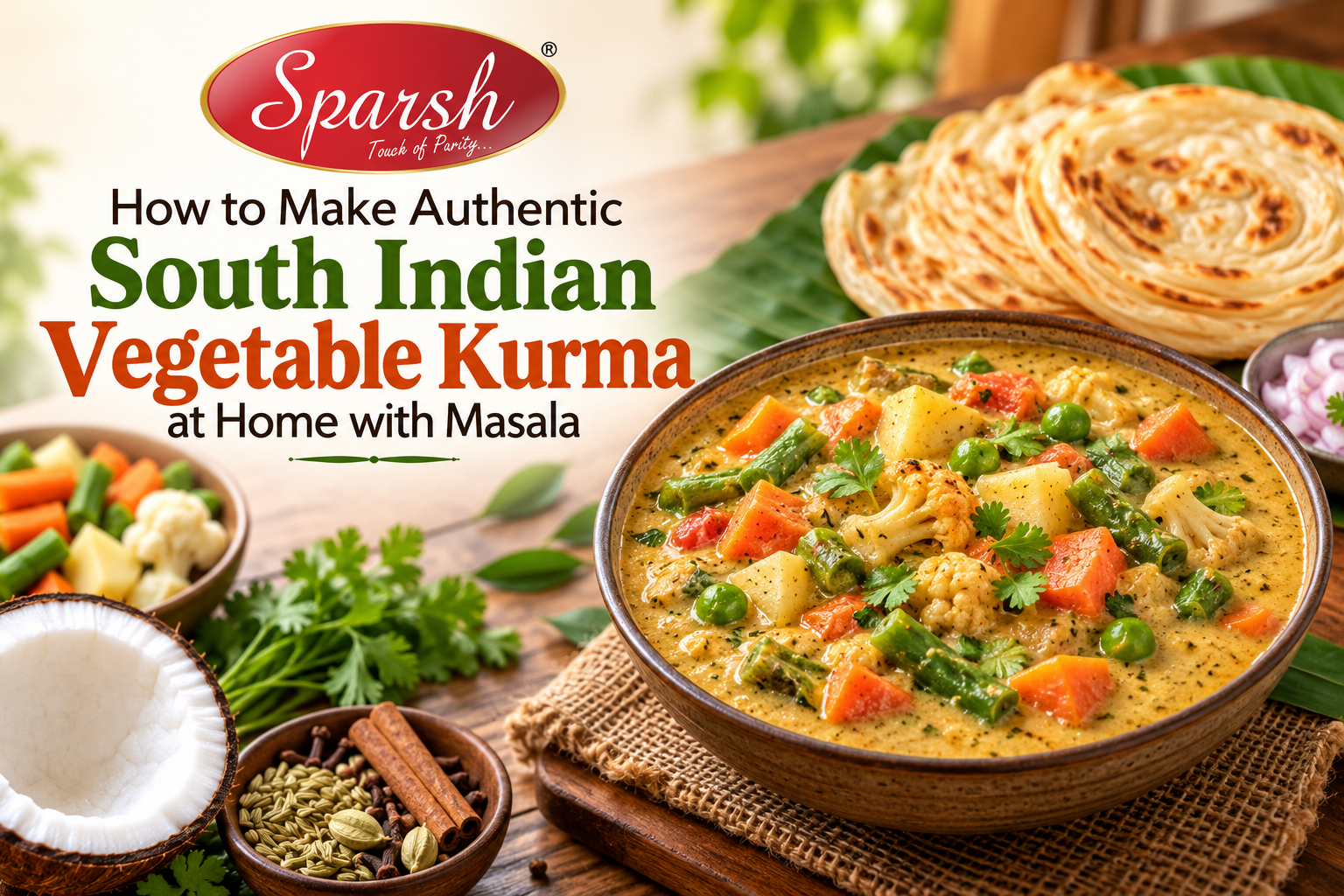
South Indian Vegetable Kurma Recipe is a delicious, creamy and aromatic dish made with mixed vegetables, coconut, spices and a flavourful masala base. It is commonly served with parotta, chapati, dosa, idiyappam, appam and even steamed rice.
The secret to a tasty vegetable kurma is achieving the right balance of vegetables, coconut, spices and aromatic masala. With the right ingredients and a good-quality masala powder, you can prepare a restaurant-style South Indian vegetable kurma easily at home.
In this guide, learn how to make a simple and flavourful South Indian Vegetable Kurma Recipe step by step.
What Is South Indian Vegetable Kurma?
Vegetable kurma is a popular South Indian curry prepared using vegetables cooked in a rich, mildly spiced gravy. Depending on the region and family recipe, the gravy may be prepared using coconut, scashews, poppy seeds, roasted spices or a combination of these ingredients.
Unlike very spicy curries, vegetable kurmapices makes it a versatile dish for breakfast, lunch or dinner.
Ingredients for South Indian Vegetable Kurma
For the Vegetable Kurma
- 1 cup potato, peeled and cubed
- 1 cup carrot, chopped
- ½ cup green peas
- ½ cup beans, chopped
- ½ cup cauliflower florets
- 1 medium onion, finely chopped
- 2 medium tomatoes, chopped
- 2 green chillies, slit
- 1 teaspoon ginger-garlic paste
- 2 tablespoons cooking oil
- ½ teaspoon turmeric powder
- 1 teaspoon chilli powder
- 1½ teaspoons Sparsh Sabji Masala
- Salt to taste
- 1½ cups water
- Fresh coriander leaves for garnish
For the Coconut Masala Paste
- ½ cup fresh grated coconut
- 8–10 cashews
- 1 teaspoon fennel seeds
- ½ teaspoon cumin seeds
- 2 green chillies
- A small piece of cinnamon
- 2 cloves
- 2 cardamom pods
- A little water for grinding
How to Make South Indian Vegetable Kurma
Step 1: Prepare the Vegetables
Wash and chop the vegetables into evenly sized pieces. Keeping the pieces similar in size helps them cook evenly.
You can use vegetables such as carrots, beans, potatoes, peas and cauliflower. You can also add other vegetables depending on what you have available.
Step 2: Prepare the Coconut Masala
Add grated coconut, cashews, fennel seeds, cumin seeds, green chillies, cinnamon, cloves and cardamom to a blender.
Add a little water and grind everything into a smooth paste.
Keep the paste aside.
Step 3: Sauté the Aromatics
Heat oil in a deep pan or kadai over medium heat.
Add the chopped onions and green chillies. Sauté until the onions become soft and lightly golden.
Add the ginger-garlic paste and cook for another minute until the raw aroma disappears.
Step 4: Add the Tomatoes
Add the chopped tomatoes and cook until they become soft and mushy.
This step helps create a smooth and flavourful base for the kurma.
Step 5: Add the Spices
Add turmeric powder, chilli powder and Sparsh Sabji Masala.
Mix well and cook the spices for about 30–60 seconds.
Avoid cooking the spices for too long on high heat, as they can burn and develop a bitter taste.
Step 6: Add the Vegetables
Add the chopped vegetables and green peas to the pan.
Mix everything well so the vegetables are coated with the masala.
Cook for 2–3 minutes.
Step 7: Add Water and Cook
Pour in around 1½ cups of water and add salt according to taste.
Cover the pan and cook over medium heat until the vegetables are tender.
Do not overcook the vegetables. They should be soft but still retain some texture.
Step 8: Add the Coconut Paste
Once the vegetables are nearly cooked, add the prepared coconut masala paste.
Mix gently and cook for another 5–7 minutes on low to medium heat.
If the kurma is too thick, add a little warm water until you reach your preferred consistency.
Step 9: Finish and Garnish
Taste the kurma and adjust the salt or spices if required.
Turn off the heat and garnish with freshly chopped coriander leaves.
Your aromatic South Indian vegetable kurma is now ready to serve.
How to Make Masala Tea at Home
Follow these simple steps for a fragrant and flavourful cup of Indian masala chai.
Step 1: Boil the Water
Take a saucepan and add 1 cup of water.
Bring it to a boil over medium heat.
If you prefer stronger ginger flavour, add a small piece of freshly crushed ginger at this stage.
Step 2: Add Tea Leaves
Once the water starts boiling, add approximately 2 teaspoons of tea leaves.
Allow the tea leaves to boil for around 1–2 minutes.
This helps extract the colour and flavour from the tea.
Tip: Don’t boil the tea leaves for too long, as excessive boiling can make the tea taste bitter.
Step 3: Add Tea Masala
Now add ½ teaspoon of Sparsh Tea Masala for two cups.
Stir well and allow the mixture to simmer for around 30–60 seconds.
The warm aroma of the spices will begin to develop as the masala infuses into the tea.
Sparsh’s existing Tea Masala information describes the blend as including ingredients such as cardamom, cinnamon, ginger, black pepper, cloves, nutmeg and fennel seeds.
Step 4 : Add Milk
Pour 1 cup of milk into the saucepan.
Stir everything together and bring the chai back to a gentle boil.
For a richer chai, you can use full-fat milk.
Step 5 : Add Sugar
Add 2–3 teaspoons of sugar, depending on your preference.
Stir until the sugar dissolves completely.
You can also use jaggery as an alternative sweetener. If using jaggery, it is often better to add it after removing the tea from high heat to help prevent unwanted changes in the milk.
Step 6: Simmer the Chai
Let the tea simmer for approximately 1–2 minutes.
Keep an eye on the saucepan because milk can quickly rise when it reaches a strong boil.
For stronger chai, allow it to simmer slightly longer while keeping the heat moderate.
Step 7: Simmer the Chai
Turn off the heat and strain the tea into cups using a tea strainer.
Serve your hot masala tea immediately.
For an authentic tea-time experience, pair it with biscuits, snacks or your favourite savoury treats.
How Much Tea Masala Should You Use?
The amount of tea masala depends on how strong and spicy you like your chai.
Mild Chai
Use around ⅛–¼ teaspoon per cup.
This gives you a subtle spice aroma without overpowering the tea.
Medium-Spiced Chai
Use around ¼ teaspoon per cup.
This is a good starting point for everyday masala chai.
Strong Masala Chai
Use around ½ teaspoon per cup.
This is suitable if you enjoy a more pronounced spicy aroma.
Best approach: Start with a smaller quantity and increase it gradually until you find the flavour you prefer.
Why Use Tea Masala for Masala Chai?
Traditional masala chai can require several individual spices.
You may need to measure:
- Cardamom
- Cinnamon
- Ginger
- Black pepper
- Cloves
- Fennel
- Nutmeg
A ready-made tea masala simplifies this process.
1. Saves Preparation Time
You don’t need to crush and measure several spices every time you prepare chai.
2. Consistent Flavour
Using a prepared spice blend can make it easier to achieve a similar flavour from one cup to another.
3. Convenient for Everyday Chai
Tea masala is particularly useful for households that prepare chai regularly.
4. Rich Aroma
A balanced spice blend adds warmth and fragrance to ordinary milk tea.
For those looking for a convenient option, you can explore Sparsh Tea Masala for preparing spiced Indian chai at home.
Tips for Making the Perfect Masala Tea
Use Good-Quality Tea Leaves
The tea itself forms the base of the drink. Choose tea leaves that provide a good colour and strong flavour.
Don’t Overdo the Masala
More masala doesn’t always mean better chai. Start with a small quantity and adjust according to your taste.
Control the Boiling Time
Long, aggressive boiling can make tea taste bitter. A controlled simmer helps develop the flavour without overpowering the tea.
Use Fresh Milk
Fresh milk gives masala chai a smooth and creamy texture.
Adjust the Sweetness
Some people prefer lightly sweetened chai, while others enjoy a sweeter cup. Adjust the sugar according to your preference.
Brew According to Your Taste
If you like strong chai, increase the tea leaves slightly. If you prefer a milder cup, reduce the tea leaves or masala.
Common Mistakes to Avoid When Making Masala Chai
Adding Too Much Masala
Too much spice can overpower the tea. Start small and increase gradually.
Boiling Tea Leaves for Too Long
Excessive boiling can create bitterness.
Using Too Much Water
Too much water can dilute the tea and make the flavour weak.
Adding Too Much Milk
An overly milky chai may hide the flavour of the tea and spices.
Not Allowing the Masala to Infuse
Adding the masala and immediately turning off the heat may not allow enough time for the spices to release their aroma.

Quick Masala Tea Recipe
For easy reference:
1. Boil 1 cup water.
2. Add 2 teaspoons tea leaves.
3. Add ½ teaspoon Sparsh Tea Masala.
4. Simmer for 30–60 seconds.
5. Add 1 cup milk.
6. Add sugar according to taste.
7. Simmer for another 1–2 minutes.
8. Strain and serve hot.
Tips for Making the Perfect Masala Tea
Use Good-Quality Tea Leaves
The tea itself forms the base of the drink. Choose tea leaves that provide a good colour and strong flavour.
Don’t Overdo the Masala
More masala doesn’t always mean better chai. Start with a small quantity and adjust according to your taste.
Control the Boiling Time
Long, aggressive boiling can make tea taste bitter. A controlled simmer helps develop the flavour without overpowering the tea.
Use Fresh Milk
Fresh milk gives masala chai a smooth and creamy texture.
Adjust the Sweetness
Some people prefer lightly sweetened chai, while others enjoy a sweeter cup. Adjust the sugar according to your preference.
Brew According to Your Taste
If you like strong chai, increase the tea leaves slightly. If you prefer a milder cup, reduce the tea leaves or masala.
Frequently Asked Questions
What is masala tea?
Masala tea, or masala chai, is an Indian tea prepared using tea leaves, milk, sweetener and a blend of aromatic spices.
2. How much tea masala should I use for one cup?
Start with approximately ¼ teaspoon of tea masala per cup and adjust according to your preferred strength. Sparsh’s existing Tea Masala guidance also recommends about ¼ teaspoon per cup.
3. Can I make masala tea without milk?
Yes. You can prepare a spiced black tea using water, tea leaves and tea masala without adding milk.
4. Can I use jaggery instead of sugar?
Yes. Jaggery can be used as an alternative sweetener. Add it according to your preferred level of sweetness.
5. How can I make stronger masala chai?
For stronger chai, you can slightly increase the tea leaves or tea masala and allow the mixture to simmer carefully for a little longer.
6. Can I add fresh ginger to tea masala??
Yes. Freshly crushed ginger can add an extra layer of warmth and spice to masala chai.
7. What is the difference between regular tea and masala tea?
Regular tea generally focuses on the flavour of the tea leaves, while masala tea combines tea with aromatic spices, milk and a sweetener.
Enjoy a Delicious Mangalorean Mutton Curry at Home
Making a delicious masala tea at home is simple when you have the right balance of tea, milk, sweetness and aromatic spices. Using Sparsh Tea Masala Powder makes the process even more convenient, allowing you to enjoy a rich and flavourful cup of spiced Indian chai without preparing multiple spices separately.
Whether you prefer a strong, spicy chai or a mild and creamy cup, you can easily adjust the tea masala and sweetness to suit your taste. Brew a fresh cup with Sparsh Tea Masala and enjoy the comforting flavours of traditional Indian masala chai at home.
This article is for general informational purposes and is not a substitute for medical advice. Please consult a doctor or nutritionist for guidance specific to your health needs, especially if pregnant, breastfeeding, or on medication.
Written by the Sparsh Masala team, Karnataka. Last updated September 29, 2026.