
Easy Coconut Chutney Recipe: Authentic South Indian Style
This easy coconut chutney recipe, South Indian style, comes together with fresh coconut, a handful of roasted lentils, and a curry leaf tempering that takes ten minutes from start to finish, no long ingredient list and no grinding stone required. Coconut chutney is the dish most South Indian breakfasts are built around, yet it’s also one of the easiest to get slightly wrong: too watery, too bland, or bitter from a scorched tempering. This easy coconut chutney recipe fixes all three.
What Actually Goes Into a Good Coconut Chutney
Coconut chutney has just three real components: the coconut base, a small amount of roasted dal for body, and a tempering that carries most of the flavour. Getting the ratio between these right matters more than any single ingredient.
According to Wikipedia’s entry on coconut chutney, the dish originated along the coastal plains of the old Madras Presidency, where coconut plantations were common, and later spread inland across Karnataka, Tamil Nadu, and Andhra Pradesh. That coastal origin is part of why fresh coconut, not desiccated, remains the base most South Indian households insist on.
✅ Success Tip: Soak roasted chana dal in warm water for 10 minutes before grinding. It softens enough to blend smooth instead of leaving a gritty texture in the chutney.
Ingredients You'll Need
| Ingredient | Quantity | Notes |
|---|---|---|
| Fresh coconut, grated | 1 cup | White part only |
| Roasted chana dal (putani/pottu kadalai) | 2 tbsp | Soaked 10 minutes |
| Green chillies | 2-3 | Adjust to taste |
| Ginger | Small piece | Optional, adds warmth |
| Salt | To taste | |
| Water | ¼ to ½ cup | For grinding, adjust for consistency |
| Oil | 1 tbsp | For tempering |
| Mustard seeds | ½ tsp | For tempering |
| Urad dal | ½ tsp | For tempering, adds crunch |
| Curry leaves | A sprig | Fresh, essential |
| Dry red chilli | 1 | For tempering |
| Sparsh Hotel Special Hing | A pinch | For tempering, aids digestion |
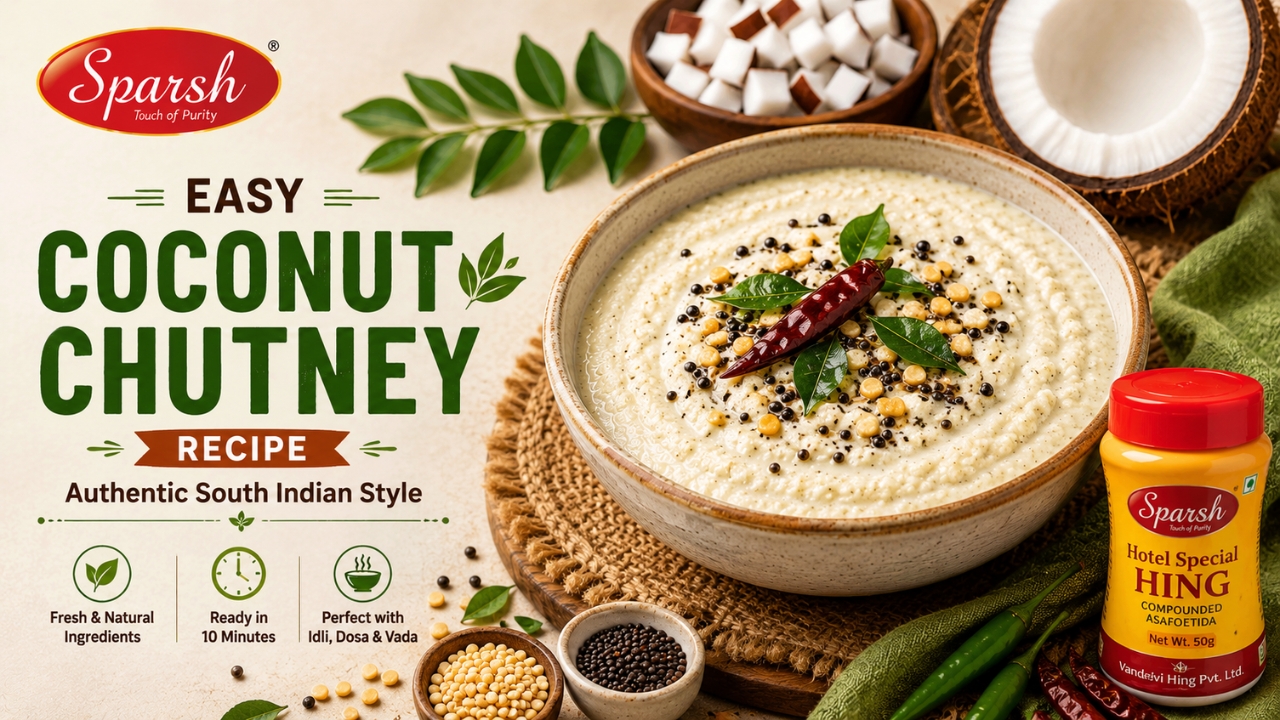
Step by Step Coconut Chutney Recipe
Getting a smooth, well-balanced chutney comes down to grinding technique and a tempering that’s added at the very end, not before.
- Grind the coconut, roasted chana dal, green chillies, ginger, and salt together with a small amount of water, just enough to help the blades move. (2-3 min)
- Add water gradually and grind to your preferred consistency, thicker for idli, slightly looser for dosa. (1 min)
- Transfer to a serving bowl.
- Heat oil in a small pan for the tempering. Add mustard seeds and let them splutter. (1 min)
- Add urad dal, sauté until golden. (30 sec)
- Add curry leaves, dry red chilli, and a pinch of Sparsh Hotel Special Hing. Sauté briefly until fragrant. (30 sec)
- Pour the hot tempering over the ground chutney and mix gently. (30 sec)
- Serve immediately with idli, dosa, or vada.
Warning Tip: Don’t let the tempering sit in the pan too long after the mustard seeds splutter. Curry leaves and hing burn fast and turn the whole chutney bitter within seconds.
Why Coconut Chutney Turns Watery, Bland, or Bitter
Watery chutney usually means too much water was added while grinding. Add water in small amounts and stop as soon as the blades move freely, rather than pouring in a fixed quantity upfront.
Bland chutney is almost always a salt or ratio problem. If the coconut-to-dal ratio leans too heavily toward dal, the chutney tastes starchy and flat instead of fresh. Keep dal to a supporting role, not the main ingredient.
Bitter chutney comes from one of two places: using the brown layer of the coconut, or burning the tempering. Both are avoidable with the timing tips above.
Coconut Chutney Variations
| Variation | What Changes | Best Paired With |
|---|---|---|
| Classic White Chutney | Standard recipe above | Idli, vada |
| Tomato Coconut Chutney | Add 1 sautéed tomato before grinding | Dosa |
| Mint Coconut Chutney | Add a handful of fresh mint leaves | Uttapam |
| Roasted Coconut Chutney | Dry roast coconut lightly before grinding | Pongal, upma |
| Coriander Coconut Chutney | Add fresh coriander leaves while grinding | Plain rice, dosa |
Is Coconut Chutney Actually Good for You?
Coconut chutney, eaten in the small portions it’s traditionally served in, fits comfortably into a balanced South Indian meal.
Fresh coconut contains fibre, manganese, and healthy fats, though it’s calorie-dense, which is exactly why it’s served as a small side rather than a main component. According to Healthline’s review of coconut nutrition, coconut meat is particularly high in manganese, a mineral involved in bone health and metabolism, along with meaningful amounts of copper and selenium. The tempering, made with curry leaves and asafoetida, is traditionally understood in South Indian households to support digestion, which is part of why it’s paired with heavier, starchier dishes like idli and dosa.
Pro Tip: If you’re making chutney for the whole week, store it without the tempering and add fresh tempering just before each serving. Pre-tempered chutney loses its aroma and turns slightly sour within a day.
Frequently Asked Questions
1. Can I use desiccated coconut instead of fresh coconut?
Fresh coconut gives the best texture and flavour, but desiccated coconut works in a pinch if soaked in warm water for 10-15 minutes first to soften it before grinding.
2. How long does coconut chutney stay fresh?
Without tempering, coconut chutney stays good in the refrigerator for about 2 days. Once tempered, it’s best eaten within a few hours for the freshest flavour.
3. Why does my coconut chutney turn pink or discoloured?
This usually happens when the chutney sits too long, or when too much ginger or certain green chilli varieties react with the coconut over time. It’s still safe to eat but best made fresh each time for the right colour and taste.
4. Can I skip the roasted chana dal?
Yes, some versions skip it entirely for a lighter, more coconut-forward chutney. It’s mainly there to add body and a slight nutty flavour, not for structural necessity.
5. What's the best consistency for idli versus dosa?
For idli, a slightly thicker chutney that holds its shape works best. For dosa, a slightly looser, pourable consistency spreads more easily alongside the crisp dosa.
6. Why does my chutney taste bitter even though I followed the recipe?
This is almost always the tempering. Curry leaves, hing, and dry red chilli burn within seconds of the mustard seeds sputtering, so pull the pan off the heat the moment they turn fragrant.
Conclusion
An easy coconut chutney recipe made the authentic South Indian way doesn’t need more than fresh coconut, a small amount of roasted dal, and a tempering that’s added at the very last second. With Sparsh Hotel Special Hing rounding out the tempering, the rest comes down to technique: grind with restraint, temper with attention, and serve it fresh. This pairs naturally with our Why Idli Turns Hard and Why Upma Turns Sticky guides to round out a complete South Indian breakfast.
Shop Sparsh Hotel Special Hing → Explore More Sparsh Recipes →