
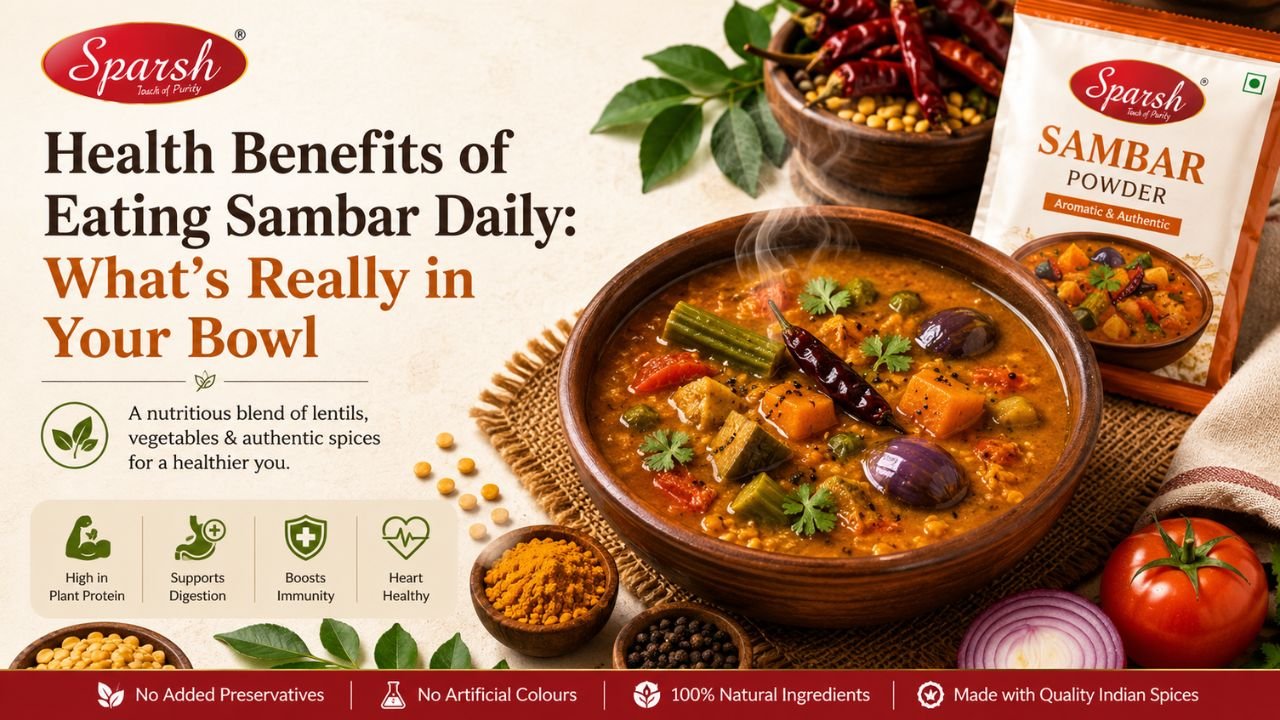
Health Benefits of Eating Sambar Daily: What's Really in Your Bowl
Health benefits of eating sambar daily start with something most people overlook while reaching for a second helping: it’s one of the few South Indian staples that combines a complete protein source, a fibre-rich vegetable mix, and a spice blend backed by real research, all in one pot. Sambar isn’t just comfort food. It’s one of the more nutritionally complete dishes in an everyday Karnataka meal.
This closes out our Sambar Cluster, alongside our Sambar Powder Guide, Why Sambar Has No Taste, and Why Sambar Tastes Sour. If you’ve already got the taste right, here’s what you’re actually getting in the bowl.
Pro Tip: Sambar tastes better and is arguably more nutrient-dense the next day, once the lentils have fully broken down and the vegetables have released more of their flavour and fibre into the broth.
The Lentil Base: Where Most of the Nutrition Comes From
Toor dal, the split pigeon pea that forms sambar’s base, is a genuine source of plant protein, fibre, iron, and folate, not just a thickening agent for the broth.
According to Healthline’s review of lentil nutrition, lentils are made up of more than 25% protein by weight, making them one of the strongest plant-based protein sources available, along with being a solid source of iron, a mineral that’s often harder to get enough of on a vegetarian diet. A single cup of cooked lentils also provides a meaningful share of daily fibre, which supports digestion and helps you feel fuller for longer.
Success Tip: Don’t strain out the dal water when making sambar. Much of the fibre and B-vitamin content ends up in the cooking liquid, not just the lentils themselves.
What the Spices Are Actually Doing
Sparsh Sambar Powder isn’t just there for flavour. Several of its core ingredients, particularly turmeric, carry research-backed properties on their own.
Turmeric, the ingredient responsible for sambar’s golden colour, contains curcumin, a compound that Healthline’s evidence review describes as having strong anti-inflammatory and antioxidant effects. This is one of the reasons turmeric has been used in Indian households for centuries, well before “curcumin” became a supplement-aisle buzzword.
Coriander seeds, cumin, and black pepper, the other core building blocks of a traditional sambar powder, are also linked to supporting digestion, which is part of why sambar has traditionally been served as an easily digestible, everyday dish rather than an occasional treat.
Pro Tip: Pairing turmeric with black pepper, which both appear in a well-balanced sambar powder, may improve how well your body absorbs curcumin, since piperine in black pepper is known to boost curcumin absorption significantly.
Nutritional Breakdown of a Typical Bowl of Sambar
| Component | Main Nutrients | What It Contributes |
|---|---|---|
| Toor dal (lentils) | Protein, fibre, iron, folate | Muscle repair, digestion, sustained energy |
| Mixed vegetables (drumstick, brinjal, pumpkin) | Fibre, vitamins A & C, potassium | Digestive support, immunity |
| Tamarind | Antioxidants, vitamin C | Tang, mild digestive support |
| Sambar Powder (turmeric, coriander, cumin, pepper) | Curcumin, antioxidants | Anti-inflammatory support, flavour depth |
| Ghee/oil tempering | Healthy fats | Helps absorb fat-soluble nutrients like curcumin |
Why Vegetables in Sambar Matter More Than People Think
The drumstick, brinjal, pumpkin, and okra typically added to sambar aren’t filler. They’re what turns a lentil soup into a genuinely balanced meal.
Each vegetable contributes a different nutrient profile: drumstick is a strong source of vitamin C and iron, pumpkin brings beta-carotene, and okra adds soluble fibre that supports gut health. Making sambar with a rotating mix of vegetables, rather than the same one or two every time, is one of the simplest ways to widen the nutritional range of a daily meal without any extra effort.
Warning Tip: Overcooking vegetables until they’re falling apart destroys a meaningful portion of their vitamin C content. Add softer vegetables like pumpkin later in the cooking process, not at the start.
Is It Actually Okay to Eat Sambar Every Day?
For most people, yes. Sambar is naturally low in saturated fat, uses lentils as its main protein source instead of red meat, and its vegetable content varies enough day to day that it doesn’t create the nutritional monotony some daily dishes do.
The main thing to watch is salt and oil quantity if it’s being eaten multiple times a day, every day, over a long period. A single, standard bowl of home-style sambar with a light tempering fits comfortably into a balanced daily diet for most healthy adults.
Frequently Asked Questions
Is sambar good for weight loss?
Sambar can support a weight-conscious diet since it’s high in fibre and protein from lentils, both of which help you feel full for longer. The overall impact depends on portion size and how much oil or ghee is used in the tempering.
Does sambar help with digestion?
Many of sambar’s core spices, including cumin, coriander, and asafoetida, are traditionally used to support digestion, and the lentil base is a good source of fibre, which supports regular digestion over time.
Is sambar a complete protein source?
Lentils alone aren’t a complete protein, but pairing sambar with rice, as is traditional, creates a complementary protein combination that provides a fuller amino acid profile than either food eaten alone.
Can diabetics eat sambar daily?
Lentils have a relatively low glycemic index compared to many staple foods, which is generally favourable, but individuals managing diabetes should consult their doctor about portion size and how it fits into their overall meal plan.
Why does sambar turn slightly different colours depending on the vegetables used?
This is normal and reflects the different vegetables in the mix. Drumstick and brinjal-heavy batches tend to look deeper and richer, while pumpkin adds a lighter, warmer tone. It doesn’t indicate anything is wrong with the dish.
Is it better to make sambar with fresh spices or a ready-made sambar powder?
Both work nutritionally. A quality ready-made blend like Sparsh Sambar Powder keeps the same core ingredients, turmeric, coriander, cumin, and pepper, without needing to roast and grind them individually every time.
Conclusion
Health benefits of eating sambar daily hold up well once you actually look at what’s in the bowl: a genuine plant protein source, a spice blend with research-backed ingredients like turmeric, and a rotating mix of vegetables that most daily meals don’t offer. With Sparsh Sambar Powder keeping that spice base consistent, the rest comes down to what vegetables you add and how much oil goes into the tempering. This completes our Sambar Cluster alongside the Sambar Powder Guide and our two “why it goes wrong” posts on taste and sourness.
This article is for general informational purposes and is not a substitute for medical advice. Please consult a doctor or nutritionist for guidance specific to your health needs.
Written by the Sparsh Masala team, Karnataka. Last updated August 13, 2026.