
Easy Puliyogare Recipe: Authentic Karnataka Style
This easy puliyogare recipe brings the tangy, spiced tamarind rice that’s served in Karnataka temples and homes straight to your kitchen, using a spice blend that does the work a dozen individually roasted ingredients would otherwise take. Puliyogare isn’t just tamarind rice with a South Indian name. It’s a dish with a specific balance of sour, sweet, and spicy that most quick versions miss entirely.
We’re completing our Karnataka Rice Cluster with this one. If you’ve already tried our Bisibele Bath or our Lemon Rice Chitranna, puliyogare rounds out the trio, and it’s arguably the most temple-adjacent of the three, often served as prasadam after darshan across Karnataka, Tamil Nadu, Andhra Pradesh, and Telangana.
Pro Tip: Puliyogare tastes better a few hours after it’s made, not immediately. The tamarind and spices need time to fully soak into the rice.
What Makes Puliyogare Different from Other Tamarind Rice
Puliyogare earns its distinct flavour from a specific ratio of tamarind, jaggery, and roasted spices that most home versions get wrong by leaning too far into either sour or sweet.
Unlike simple lemon rice, which relies on citrus for its tang, puliyogare uses tamarind pulp cooked down with jaggery, sesame seeds, and a mix of roasted lentils and spices. This gives it a deeper, more layered sourness with a background sweetness that balances the heat from red chillies. It’s traditionally eaten at room temperature, which is part of why it travels so well for temple offerings, tiffin boxes, and long journeys.
Success Tip: Use rice that’s cooked and cooled completely before mixing in the puliyogare paste. Warm rice turns mushy and the grains clump together instead of staying separate.
Ingredients You’ll Need
| Ingredient | Quantity | Notes |
|---|---|---|
| Cooked rice (sona masoori or ponni) | 3 cups | Cooled completely, grains separate |
| Sparsh Puliyogare Powder | 3-4 tbsp | Adjust to taste |
| Sesame oil or gingelly oil | 3 tbsp | Traditional choice, adds authentic aroma |
| Mustard seeds | 1 tsp | For tempering |
| Curry leaves | A sprig | Fresh, if available |
| Roasted peanuts | 2 tbsp | Optional, for crunch |
| Salt | To taste | Puliyogare Powder already contains some |
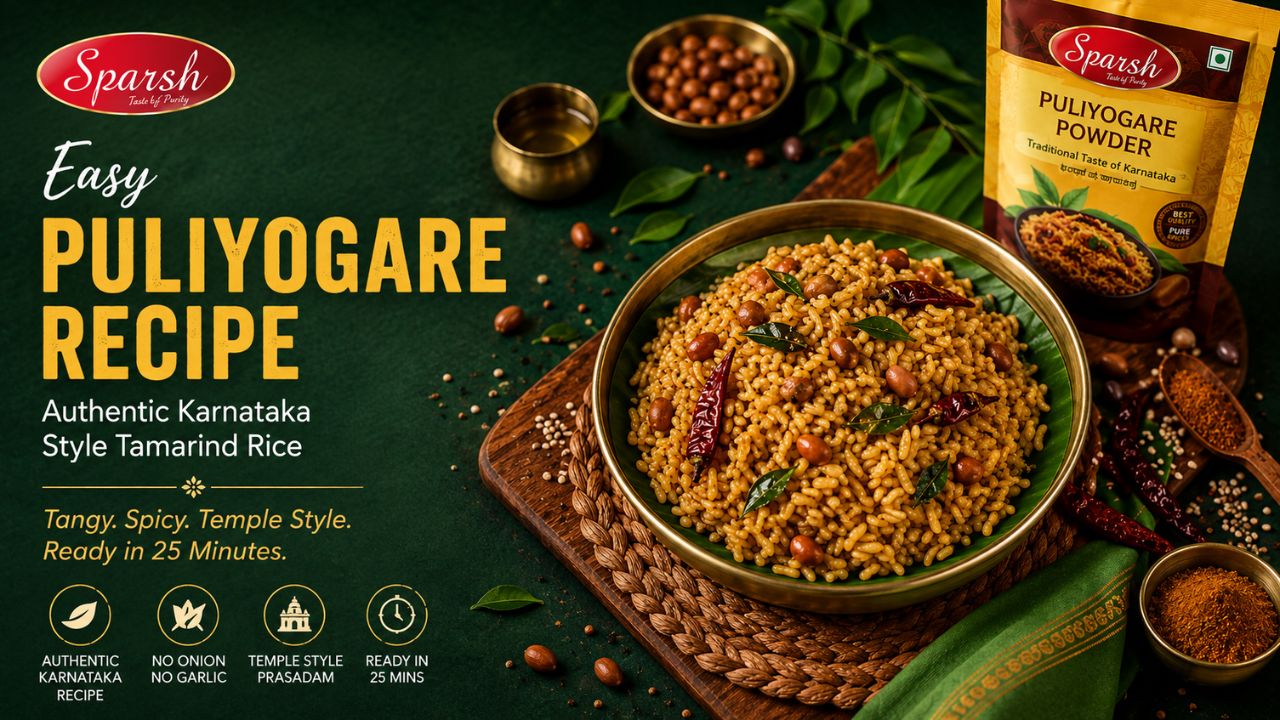
Step by Step Puliyogare Recipe
Getting the ratio right matters more than technique here, so measure the powder rather than eyeballing it the first few times you make this.
- Cook the rice using slightly less water than usual, so the grains stay firm and separate. Spread it on a plate to cool completely. (20 min)
- Heat sesame oil in a pan on medium flame. Add mustard seeds and let them splutter. (1-2 min)
- Add curry leaves and roasted peanuts, sauté for 30 seconds. (1 min)
- Lower the flame and add 3-4 tablespoons of Sparsh Puliyogare Powder directly into the oil. Stir for a minute to release the aroma without burning the spices. (1-2 min)
- Add the cooled rice to the pan in batches, folding gently so every grain gets coated without breaking. (3-4 min)
- Taste and adjust with a little more powder or a pinch of salt if needed. (1 min)
- Let it rest for at least 20 minutes before serving, covered, so the flavours settle into the rice. (20 min)
Warning Tip: Don’t add the puliyogare powder to hot oil on high flame. It burns fast and turns bitter within seconds.
Puliyogare vs Lemon Rice vs Bisibele Bath
All three are cornerstones of Karnataka’s rice repertoire, but they solve very different cravings.
| Factor | Puliyogare | Lemon Rice (Chitranna) | Bisibele Bath |
|---|---|---|---|
| Base flavour | Tamarind, jaggery, sesame | Fresh lemon, mustard | Lentils, vegetables, spices |
| Texture | Dry, grains separate | Dry, light | Wet, porridge-like |
| Best for | Temple food, travel, tiffin | Quick weekday lunch | Comfort meal, one-pot dinner |
| Shelf stability | Stays good unrefrigerated longest | Good for a day | Best eaten fresh |
| Occasion | Festivals, prasadam | Everyday | Rainy days, comfort food |
If you haven’t tried the other two yet, our Bisibele Bath and Lemon Rice Chitranna recipes complete this cluster alongside this one.
The Story Behind Puliyogare
Puliyogare, known as Pulihora in Andhra Pradesh and Telangana and Puliyodarai in Tamil Nadu, is one of South India’s oldest documented rice preparations. According to Wikipedia’s entry on the dish, historians trace a Pulihora recipe to Thanjavur temple kitchen inscriptions dating back to 1010 CE, which places this dish among the longest continuously made recipes in South Indian cuisine.
That temple connection is why puliyogare still carries a slightly ceremonial feel even when made on an ordinary Tuesday. It was designed to be made in large batches, stay edible without refrigeration, and travel well, exactly the qualities that make it a strong lunchbox and travel-food choice today.
Pro Tip: For festival-quantity batches, double the oil slightly. Puliyogare relies on the oil coating each grain to stay fresh longer without refrigeration.
Frequently Asked Questions
Can I make puliyogare without a ready-made powder?
Yes, traditionally it’s made by roasting and grinding tamarind, red chillies, sesame seeds, coriander, and lentils fresh. Using Sparsh Puliyogare Powder simply skips the roasting and grinding steps while keeping the same flavour profile.
How long does puliyogare stay fresh?
Made with enough oil and stored in a cool, dry place, puliyogare typically stays good for 2-3 days without refrigeration, which is part of why it was historically used as travel and temple food.
Can I add vegetables to puliyogare?
Traditional puliyogare is kept plain to let the tamarind and spice flavour stand out, but some households add roasted peanuts, cashews, or fried gram for texture, which is common and welcomed.
Can I add vegetables to puliyogare?
Traditional puliyogare is kept plain to let the tamarind and spice flavour stand out, but some households add roasted peanuts, cashews, or fried gram for texture, which is common and welcomed.
What's the difference between puliyogare and pulihora?
They’re regional names for the same dish. Puliyogare is the Karnataka and Tamil Nadu term, while Pulihora is used in Andhra Pradesh and Telangana. The core recipe and flavour profile are nearly identical.
Why does my puliyogare taste bitter?
This usually happens when the puliyogare powder is added to oil that’s too hot, or cooked for too long after adding it. Add the powder on a lowered flame and stir for no more than a minute before mixing in the rice.
Can I use brown rice or other rice varieties?
Yes, though sona masoori or ponni rice are traditional for their texture. Brown rice works but needs a slightly longer cooling time to firm up before mixing with the paste.
Conclusion
An easy puliyogare recipe made the authentic Karnataka way doesn’t need a dozen roasted spices measured out individually. With Sparsh Puliyogare Powder handling the blend, what’s left is simple technique: cool rice, gently tempered oil, and a few minutes of resting time before it’s ready to serve. This completes our Karnataka Rice Cluster alongside Bisibele Bath and Lemon Rice, three dishes that between them cover almost every mood a Karnataka kitchen reaches for.
Shop Sparsh Puliyogare Powder → Explore More Sparsh Recipes →
Recipe developed and tested by the Sparsh Masala kitchen team, Karnataka. Last updated August 12, 2026.