
How to Make Perfect Sambar at Home: Authentic South Indian Recipe
Sambar is one of the most iconic dishes in South Indian cuisine. Loved for its rich flavour, comforting aroma, and wholesome ingredients, it is served daily in millions of homes across Karnataka, Tamil Nadu, Andhra Pradesh, Telangana, and Kerala. Whether paired with fluffy idlis, crispy dosas, steamed rice, or soft vadas, sambar brings warmth and satisfaction to every meal.
Many people think preparing authentic sambar is difficult because of the variety of spices involved. However, with the right ingredients and a quality sambar powder, making restaurant-style sambar at home is easier than you think.
In this guide, you’ll learn how to make perfect sambar at home, discover expert cooking tips, avoid common mistakes, and enjoy an authentic South Indian recipe that’s perfect for breakfast, lunch, or dinner.
What Makes South Indian Sambar Special?
Sambar is a lentil-based vegetable stew flavoured with tamarind and aromatic spices. Unlike ordinary curries, sambar combines vegetables, dal, and a carefully balanced spice blend to create a nutritious dish with a unique tangy and mildly spicy flavour.
Every South Indian state has its own variation:
- Karnataka Sambar – Slightly sweeter with balanced spices.
- Tamil Nadu Sambar – Rich in tamarind and aromatic spices.
- Andhra Sambar – Slightly spicier.
- Kerala Sambar – Includes coconut in some variations.
Despite these differences, the cooking process remains largely the same.
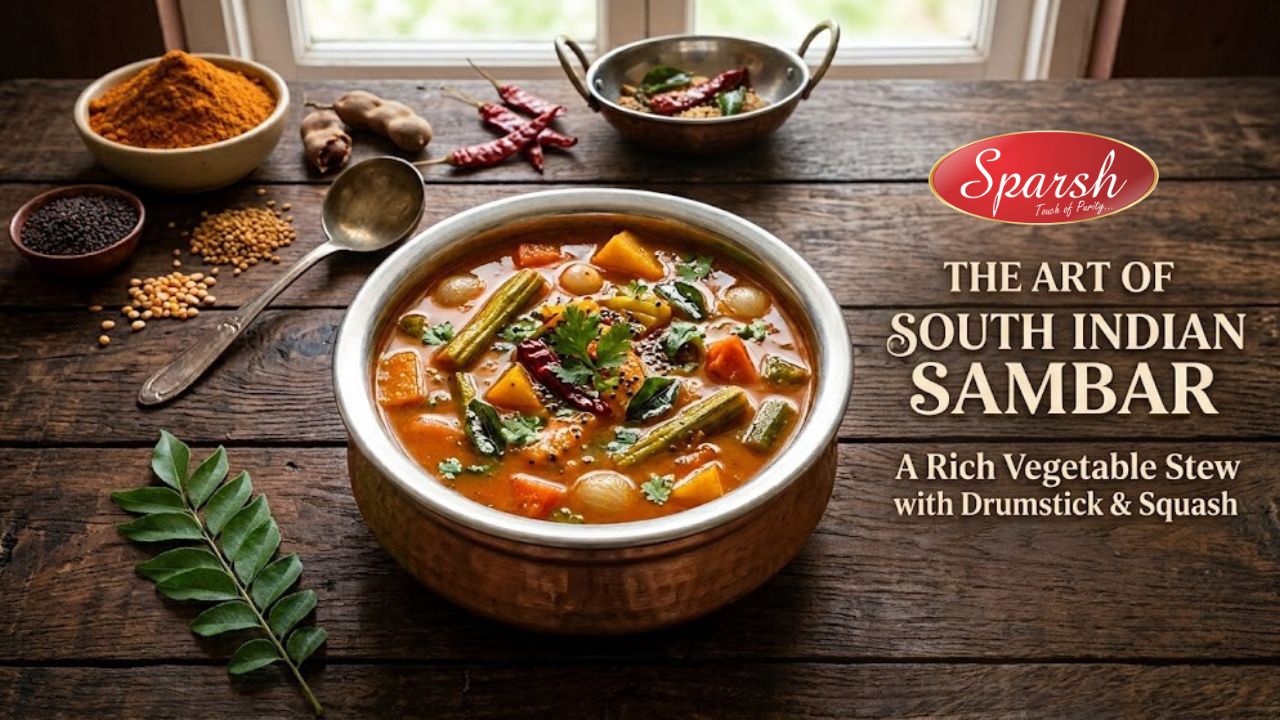
Ingredients
You’ll need:
- 1 cup toor dal (split pigeon peas)
- 1 onion (sliced)
- 2 tomatoes (chopped)
- 1 drumstick (cut into pieces)
- 1 carrot (chopped)
- 6–8 shallots (optional)
- 1 small brinjal (optional)
- Tamarind (lemon-sized)
- 2 tbsp Sparsh Sambar Powder (or your preferred sambar powder)
- ½ tsp turmeric powder
- Salt to taste
- Fresh coriander leaves
For Tempering
- 2 tsp oil or ghee
- 1 tsp mustard seeds
- 1 tsp cumin seeds
- Curry leaves
- 2 dried red chillies
- A pinch of asafoetida (hing)
Step 1 – Cook the Dal
Wash the toor dal thoroughly.
Pressure cook with:
- Turmeric
- Water
Cook until soft and mash well.
Well-cooked dal gives sambar its creamy texture.
Step 2 – Cook the Vegetables
In a large pot, add:
- Onion
- Tomatoes
- Drumstick
- Carrot
- Brinjal
Cook until tender.
Do not overcook the vegetables.
Step 3 – Prepare Tamarind Extract
Soak tamarind in warm water for 15 minutes.
Squeeze and strain the pulp.
Add the tamarind extract to the vegetables.
Allow it to simmer for 8–10 minutes.
Step 4 – Add Sambar Powder
Add Sparsh Sambar Powder to the simmering mixture.
Mix well.
Cook for 5 minutes on low heat.
This allows the spices to blend perfectly.
Step 5 – Add the Cooked Dal
Mix the mashed dal into the vegetable mixture.
Add water if necessary.
Simmer gently for another 10 minutes.
Step 6 – Prepare the Tempering
Heat oil or ghee.
Add:
- Mustard seeds
- Cumin seeds
- Curry leaves
- Dried red chillies
- Hing
Once aromatic, pour the tempering over the sambar.
Garnish with chopped coriander leaves.
Tips for Making Perfect Sambar
- Use fresh toor dal.
- Always cook the vegetables until just tender.
- Fresh tamarind gives better flavour than bottled paste.
- Simmer after adding sambar powder.
- Add tempering just before serving.
- Rest the sambar for 10 minutes before serving.
Health Benefits of Sambar
Sambar is not only delicious but also nutritious.
It contains:
- Protein from toor dal
- Fibre from vegetables
- Vitamins and minerals
- Antioxidants from spices
It is a wholesome meal when paired with rice or idli.
Best Vegetables for Sambar
You can use one or more of these vegetables:
- Drumstick
- Carrot
- Pumpkin
- Brinjal
- Radish
- Bottle gourd
- Okra (added separately)
- Shallots
Each vegetable contributes its own unique flavour.
Best Side Dishes for Sambar
Sambar tastes delicious with:
- Soft idli
- Crispy dosa
- Medu vada
- Steamed rice
- Pongal
- Upma
It can also be enjoyed as a light soup.
Why Choose Sparsh Masala?
Authentic South Indian recipes deserve authentic spice blends.
What Makes Sparsh Masala Special?
- Premium-quality spices
- Carefully balanced recipes
- Rich aroma
- Hygienically processed
- Consistent flavour
- Trusted for everyday Indian cooking
Whether you’re preparing sambar, rasam, biryani, curries, or rice dishes, Sparsh Masala helps you recreate traditional flavours with ease.
Frequently Asked Questions
1. Which dal is best for sambar?
Toor dal is traditionally used because it provides the perfect texture and flavour.
2. Can I make sambar without tamarind?
Yes, but tamarind gives authentic South Indian sambar its characteristic tangy flavour.
3. How long does homemade sambar stay fresh?
Refrigerated sambar remains fresh for up to two days.
4. Which vegetables are best for sambar?
Drumstick, carrot, pumpkin, brinjal, radish, and shallots are commonly used.
5. Which sambar powder is best?
Choose a premium-quality spice blend made with carefully selected spices for authentic South Indian flavour, such as Sparsh Sambar Powder.
CONCLUSION
Learning how to make perfect sambar at home is one of the easiest ways to bring authentic South Indian flavours to your kitchen. With fresh vegetables, well-cooked dal, quality spices, and proper tempering, you can prepare delicious homemade sambar that pairs beautifully with idli, dosa, rice, or vada.
For consistently rich aroma and balanced flavour, choose premium spice blends from Sparsh Masala and enjoy traditional South Indian cooking every day.