
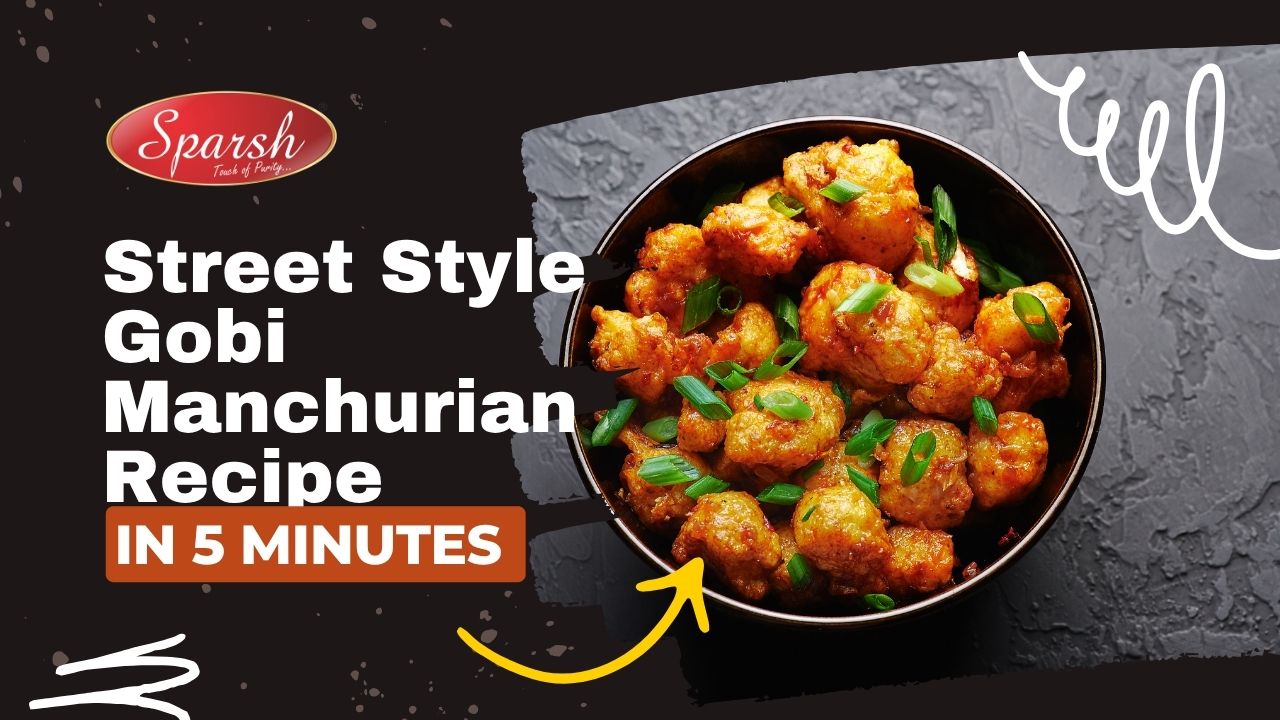
Street style gobi manchurian is the kind of appetizer that disappears from the plate in minutes. It is crispy cauliflower florets coated in a thick, tangy, umami-rich sauce that clings to every piece. The texture contrast — crispy outside, tender inside — combined with the complex flavour of the sauce is absolutely addictive.
The challenge with making gobi manchurian at home is that restaurant versions taste dramatically better than most homemade attempts. The difference is not the ingredients — it is the technique. Restaurant gobi manchurian uses a specific sauce formulation, precise timing, and a high-heat cooking method that home cooks usually do not replicate.
In this guide, we walk you through the complete street style gobi manchurian recipe — from the crispy fried cauliflower to the thick, glossy sauce that defines authentic street food versions. By the end, you will produce gobi manchurian that tastes like the best street food versions, not the bland homemade attempts.
Why Street Style Gobi Manchurian Is Different
Street food gobi manchurian is different from restaurant versions or home-cooked versions in several important ways.
The Sauce Is Thicker and More Concentrated
Street vendors make gobi manchurian in large woks over high heat. The sauce reduces quickly and becomes thick, glossy, and concentrated. This thick sauce coats the cauliflower heavily, giving every bite intense flavour. Most home cooks make thin sauce that slides off the cauliflower — this is not street style.
The Cauliflower Is Smaller and Crispier
Street vendors cut cauliflower into smaller florets (1-1.5 inches) which crisp up completely in 20-30 seconds. Larger florets used in home cooking take longer to fry and often turn greasy. Smaller pieces mean maximum crispiness.
The Sauce Contains Cornstarch Slurry
Street vendors thicken the sauce with cornstarch slurry (cornstarch mixed with water). This creates the signature glossy, sticky texture that clings to the cauliflower. Most homemade recipes skip this step and end up with thin sauce.
The Heat Is High and the Toss Is Quick
Street vendors cook in high-heat woks and toss the mixture continuously for 30-40 seconds. This quick toss coats the cauliflower evenly and prevents it from getting soggy. Most home cooks cook at lower temperature for longer, which makes everything soft.
Understanding these differences is the key to making authentic street style gobi manchurian at home.
Ingredients for Street Style Gobi Manchurian Recipe (Serves 4)
For the Crispy Cauliflower
- 500 grams fresh cauliflower — cut into small florets (1 to 1.5 inches)
- 1 cup all-purpose flour (maida)
- 1/2 cup cornstarch
- 1/4 cup rice flour
- 3/4 cup water — adjust for batter consistency
- 1 teaspoon salt
- 1/2 teaspoon black pepper powder
- 1/2 teaspoon red chilli powder
- 1 tablespoon lemon juice
- 2 cloves garlic — minced
- Oil for deep frying — vegetable or groundnut oil
For the Manchurian Sauce
- 3 tablespoons oil
- 4–5 green chillies — sliced
- 1 tablespoon ginger — minced
- 1 tablespoon garlic — minced
- 1 small onion — diced
- 1 green bell pepper — diced
- 3 tablespoons ketchup
- 2 tablespoons soy sauce
- 1 tablespoon vinegar or lemon juice
- 1/2 teaspoon chilli sauce
- 1/2 teaspoon sugar
- Salt to taste
- Water for sauce consistency (about 1/2 cup)
For the Cornstarch Slurry (Secret to Thick Sauce)
- 2 tablespoons cornstarch
- 3 tablespoons water — mix until smooth, no lumps
For Garnish
- 2 tablespoons spring onions — chopped
- 1 tablespoon coriander leaves — chopped
- Sesame seeds (optional)
Step-by-Step Street Style Gobi Manchurian Recipe
Step 1: Prepare and Dry the Cauliflower
Clean the cauliflower and cut into small florets — about 1 to 1.5 inches long with minimal stem. Small florets are essential for street style crispiness.
Pat the cauliflower completely dry with paper towels. Any moisture on the surface prevents the batter from crisping and causes oil splattering.
Step 2: Make the Batter
In a large bowl, mix all-purpose flour, cornstarch, rice flour, salt, black pepper, and red chilli powder.
Add minced garlic and lemon juice.
Gradually add 3/4 cup water, stirring continuously. The batter should be thin — similar to pancake batter, not thick cake batter. If too thick, add more water one tablespoon at a time.
The batter should coat the cauliflower but drip off easily.
Step 3: Heat Oil to Correct Temperature
Pour oil into a deep, heavy-bottomed pan — you need at least 2 inches of oil depth.
Heat on medium-high flame. To test temperature, drop a small piece of cauliflower into the oil. If it immediately sizzles and bubbles surround it, the oil is ready (around 180°C or 350°F).
If it sinks or takes time to float, the oil is not hot enough. If it browns in 5 seconds, the oil is too hot.
Step 4: Fry the Cauliflower in Small Batches
Working in small batches (do not overcrowd), coat each cauliflower floret in the batter, ensuring full coverage on all sides.
Carefully place coated florets into hot oil. Each floret should immediately sizzle.
Fry for 25–30 seconds, turning once halfway through so both sides crisp up.
The florets should turn golden brown in this short time. If they take longer, the oil is too cool.
Use a slotted spoon to remove fried cauliflower and drain on paper towels.
Continue with remaining florets in batches. Do not fry too many at once — this drops the oil temperature and results in greasy cauliflower.
Step 5: Make the Manchurian Sauce
Heat 3 tablespoons of oil in a large pan or wok on high heat.
Add sliced green chillies and minced ginger and garlic. Stir for 10–15 seconds until fragrant.
Add diced onion and bell pepper. Stir continuously for 30–40 seconds until slightly soft but still with a slight crunch.
Add ketchup, soy sauce, vinegar, chilli sauce, and sugar. Stir well to combine.
Add water (about 1/2 cup) to create the sauce base. The mixture should be liquid but flavourful.
Add salt to taste. The sauce should taste umami-rich, slightly tangy, spicy, and slightly sweet all at once.
Step 6: Thicken the Sauce with Cornstarch Slurry (Critical Step)
While the sauce is cooking on high heat, prepare the cornstarch slurry: mix 2 tablespoons cornstarch with 3 tablespoons water until completely smooth with no lumps.
Slowly pour the cornstarch slurry into the hot sauce while stirring continuously. The sauce will immediately thicken and become glossy.
Keep stirring for 1–2 minutes until the sauce reaches the right consistency — it should be thick enough to coat a spoon, not runny.
This thick, glossy sauce is what defines street style gobi manchurian.
Step 7: Toss the Cauliflower in the Sauce
Add the warm, freshly fried cauliflower florets to the hot sauce pan.
Toss continuously and vigorously for 30–40 seconds. Every floret should be completely coated in the thick sauce.
Remove from heat immediately.
The entire tossing process should take less than one minute. Do not over-toss or the cauliflower becomes soggy.
Step 8: Garnish and Serve
Transfer to a serving plate immediately.
Garnish with chopped spring onions, fresh coriander leaves, and sesame seeds (if using).
Serve hot. Street style gobi manchurian loses its crispiness within 5–10 minutes as it sits, so serve immediately.
Tips for Perfect Street Style Gobi Manchurian
Use cornstarch slurry for the sauce. This is what separates street style from weak homemade versions. The cornstarch creates the glossy, sticky texture that clings to the cauliflower.
Keep oil temperature consistent. Use a thermometer if you have one — 180°C is ideal. Low oil temperature equals greasy, soft cauliflower. High temperature equals burnt outside, raw inside.
Do not skip the small floret size. Large florets do not crisp up properly. Aim for 1 to 1.5 inches maximum.
Fry in small batches. Overcrowding the pan drops the oil temperature and results in oil absorption instead of crisping.
Pat cauliflower completely dry before battering. Moisture prevents proper frying.
Toss while everything is hot. Cold cauliflower in hot sauce becomes soggy. Cold sauce with hot cauliflower does not adhere properly.
Serve immediately. This dish is at its peak for only the first 5–10 minutes.
5 Frequently Asked Questions
Q1. What is the difference between gobi manchurian and gobi 65?
Both are crispy fried cauliflower dishes, but they are different. Gobi 65 uses a thin, tangy sauce with ketchup and vinegar. Gobi manchurian uses a thick, umami-rich sauce with soy sauce and cornstarch slurry. Manchurian sauce is heavier and more glossy. Gobi 65 is spicier and tangier. Both are delicious — gobi manchurian is the thicker, more indulgent version. For a similar crispy cauliflower appetizer with a different sauce style, you can explore the crispy gobi 65 recipe.
Q2. Can I make this without deep frying?
You can try air frying at 200°C for 10–12 minutes, but the texture will not be the same. Deep frying is the only way to achieve the authentic crispy exterior and tender interior that street style demands. If you want to reduce oil, accept that the texture will be different.
Q3. How long does gobi manchurian stay crispy?
About 5–10 minutes after cooking. After that, the coating softens as it absorbs moisture. If you must make it ahead, fry the cauliflower but do not add the sauce. Reheat in a hot oven for 3–4 minutes before tossing in fresh sauce.
Q4. Can I use frozen cauliflower?
Yes, but thaw it completely and pat it very dry. Frozen cauliflower has more moisture, so ensure extra drying before battering and frying. The texture will not be quite as crispy as fresh, but it will work.
Q5. What oil should I use for deep frying?
Use oils with high smoke points — vegetable oil, groundnut oil, or refined sunflower oil. Avoid coconut oil and olive oil. Groundnut oil is traditional in Indian cooking and provides subtle flavour.
Conclusion
Street style gobi manchurian is not complicated, but it requires understanding the technique. The crispy cauliflower, thick glossy sauce, and proper tossing method combine to create the addictive street food version. Make this recipe and you will produce gobi manchurian that tastes like the best street food vendors serve — not the weak homemade attempts.
Serve hot, serve immediately, and enjoy the texture contrast and complex flavours that make street style gobi manchurian so popular. If you are looking to build a complete kitchen spice essentials collection, having the right masala powders on hand will elevate all your cooking, including this dish.
Shop Sparsh Masala Kitchen Essentials
CONCLUSION
Street style gobi manchurian is not complicated, but it requires understanding the technique. The crispy cauliflower, thick glossy sauce, and proper tossing method combine to create the addictive street food version. Make this recipe and you will produce gobi manchurian that tastes like the best street food vendors serve — not the weak homemade attempts. Serve hot, serve immediately, and enjoy the texture contrast and complex flavours that make street style gobi manchurian so popular. If you are looking to build a complete kitchen spice essentials collection (link: /kitchen-spice-essentials-must-have-indian-masalas/), having the right masala powders on hand will elevate all your cooking, including this dish.