
Kasuri Methi Paratha Recipe: Soft, Crispy, and Ready in 30 Minutes
This kasuri methi paratha recipe folds dried fenugreek leaves directly into layered wheat dough, giving you a flatbread that's crispy on the outside, soft inside, and carries that distinct, slightly bitter-sweet aroma kasuri methi is known for. It's simpler than a stuffed paratha and pairs with almost anything already in your fridge, curd, pickle, or a quick sabzi.
This is one of the most common ways Indian households actually use dried fenugreek leaves, and it's a good starting point if you've only ever added kasuri methi to curries and gravies before.
Pro Tip: Crush the kasuri methi between your palms before adding it to the dough. This releases far more aroma than adding it whole.
Why Kasuri Methi Works So Well in Paratha Dough
Dried fenugreek leaves have a concentrated flavour that fresh methi doesn't carry in the same way, since drying intensifies the leaf's natural compounds rather than diluting them. Wikipedia's entry on fenugreek notes that its leaves are used both fresh and dried across South Asian, Middle Eastern, and North African cooking, valued for their distinctive maple-like aroma, which comes through even more clearly once the leaves are worked into a rolled, layered dough like paratha.
Sparsh Kasuri Methi is made from sun-dried fenugreek leaves specifically, which keeps that aroma concentrated rather than faded, the difference between a paratha that just tastes like plain roti and one that actually tastes like something.
✅ Success Tip: Add a small pinch of ajwain (carom seeds) along with the kasuri methi. The two together are a classic combination that also makes the paratha easier to digest.
Ingredients You'll Need
| Ingredient | Quantity | Notes |
|---|---|---|
| Whole wheat flour (atta) | 2 cups | Plus extra for dusting |
| Sparsh Kasuri Methi | 2-3 tbsp | Crushed between palms |
| Carom seeds (ajwain) | ½ tsp | Optional, aids digestion |
| Sparsh Chilli Powder | ½ tsp | Adjust to taste |
| Salt | To taste | — |
| Oil | 2 tbsp | For the dough |
| Water | As needed | For kneading |
| Ghee or oil | For roasting | Generous amount for crisp layers |
Step by Step Kasuri Methi Paratha Recipe
Getting well-defined, crispy layers comes down to the folding technique, not just the dough itself.
- Combine the flour, crushed kasuri methi, ajwain, chilli powder, and salt in a large bowl. Mix well so the methi is distributed evenly. (2 min)
- Add 2 tbsp oil and rub it into the flour mixture until it resembles coarse breadcrumbs. This step is what gives the paratha its flaky texture. (2 min)
- Gradually add water and knead into a soft, smooth dough. Cover and rest for 15-20 minutes. (15-20 min)
- Divide the dough into equal balls and roll each into a small disc. (2 min)
- Brush with a little oil or ghee, fold into a triangle or roll up and coil into a spiral, then flatten and roll out again into a paratha shape. This layering step is what creates the flaky texture. (3-4 min per paratha)
- Heat a tawa on medium-high flame. Place the rolled paratha on it. (1 min)
- Cook until small bubbles appear, flip, and add ghee or oil around the edges. Press gently with a spatula while cooking to help it puff and crisp evenly. (3-4 min per side)
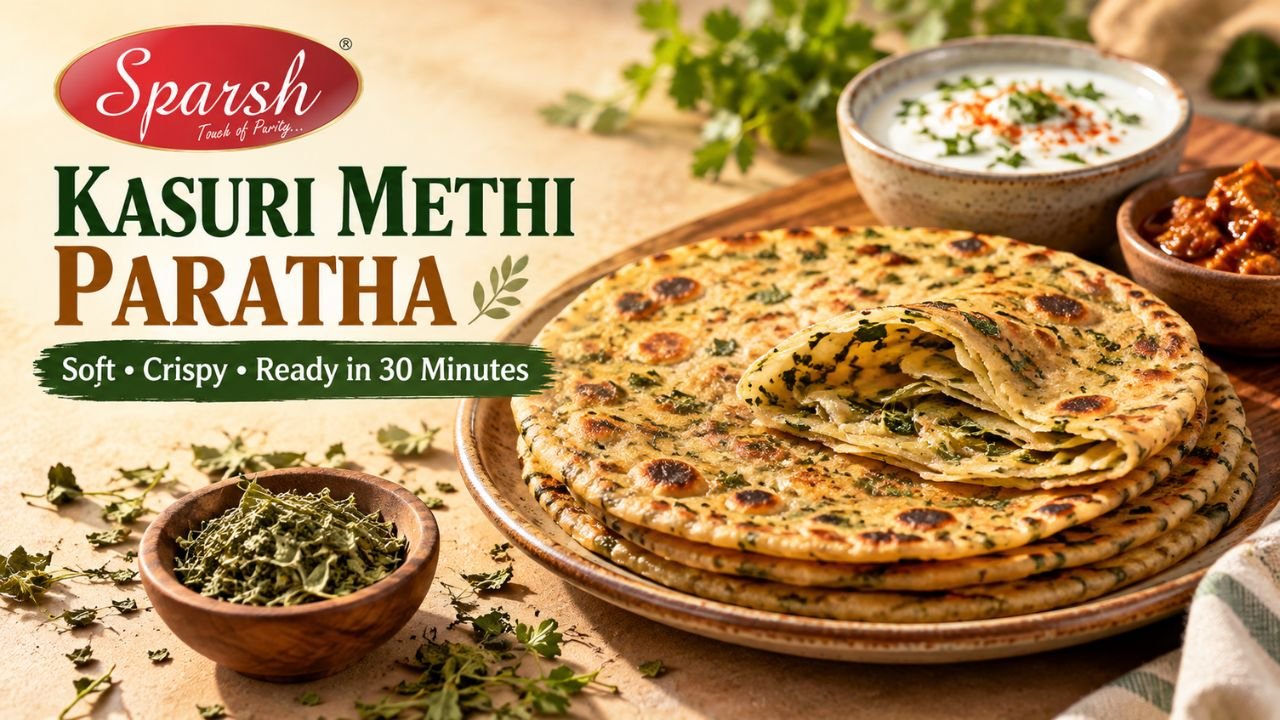
- Cook until both sides are golden-brown with visible crisp spots, then serve hot.
⚠️ Warning Tip: Don't skip the resting time on the dough. Rolling it too soon makes the paratha tough instead of soft, no matter how well you layer it.
Serving Suggestions
| Pairing | Why It Works |
|---|---|
| Plain curd or raita | Cools the palate against the paratha's slight bitterness |
| Pickle (achaar) | Classic North Indian pairing, adds tang |
| Butter | Traditional finishing touch, softens the crisp edges |
| Simple dal | Turns the paratha into a full, balanced meal |
| Tea | The most common everyday pairing for a light breakfast |
Frequently Asked Questions
Can I make kasuri methi paratha without ajwain?
Yes, ajwain is optional and mainly added for digestion and a subtle additional aroma. The paratha will still taste good with just kasuri methi, chilli powder, and salt.
Why does my paratha turn hard instead of soft and flaky?
This usually means the dough wasn't rested long enough, or too little oil was used in the layering step. Resting the dough for at least 15 minutes and being generous with oil or ghee while folding both help keep it soft.
Can I use fresh methi leaves instead of kasuri methi?
Fresh methi leaves work but give a different result, less concentrated flavour and a slightly different texture in the dough since fresh leaves carry more moisture. Kasuri methi is the more traditional choice for this specific paratha style.
How long does kasuri methi paratha stay soft after cooking?
Wrapped in a cloth or kept in an insulated container, it stays soft for a few hours, making it a good lunchbox option. It's best eaten fresh and hot for the crispest texture.
Can I add other vegetables to this dough?
Yes, grated radish, carrot, or even leftover mashed potato can be worked into the same dough alongside the kasuri methi for a heartier version.
Is kasuri methi paratha good for weight-conscious diets?
Made with whole wheat flour and a moderate amount of oil, it fits reasonably into a balanced diet, especially compared to deep-fried alternatives. Portion size and the amount of ghee used are the main things to watch.
Conclusion
A kasuri methi paratha recipe doesn't need a long ingredient list or a stuffing to get right, just well-rested dough, a generous crush of dried fenugreek leaves, and a careful fold for those signature crisp layers. With Sparsh Kasuri Methi carrying the aroma, the rest comes down to technique you can get right on your very first try.
Shop Sparsh Spices Explore More Sparsh Recipes
Recipe developed and tested by the Sparsh Masala kitchen team, Karnataka. Last updated August 19, 2026.