
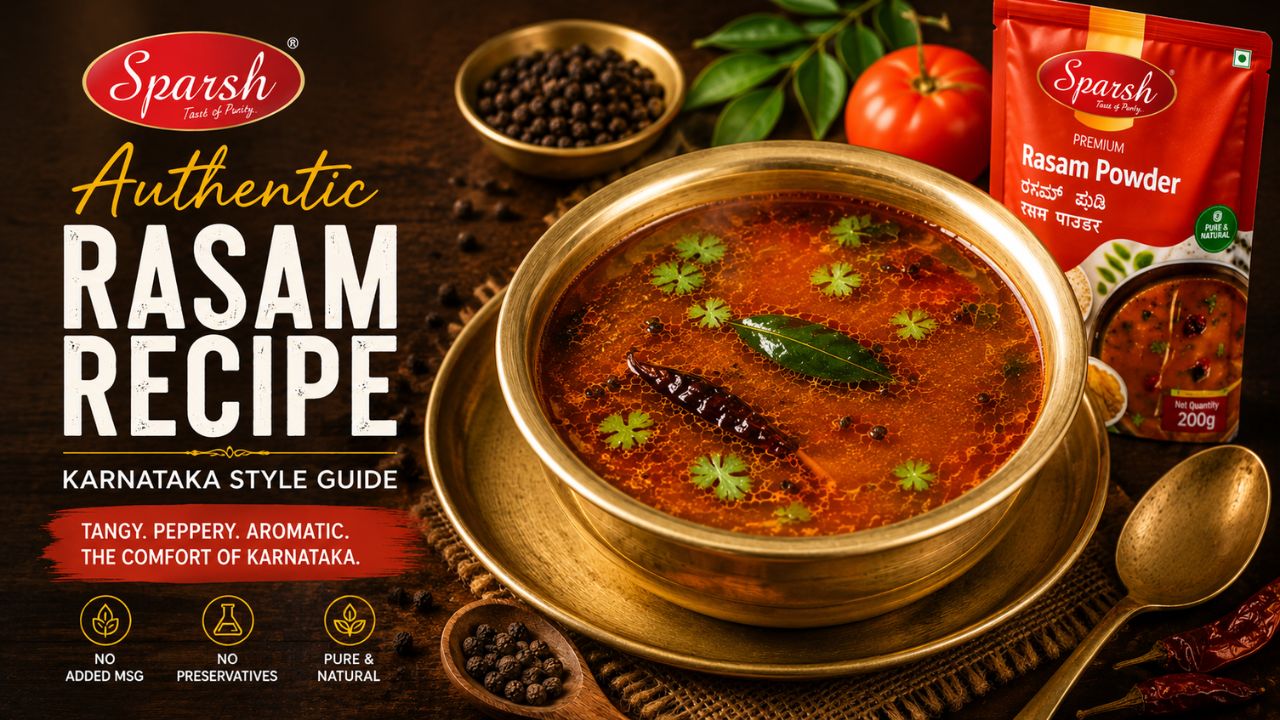
Authentic Rasam Recipe: Karnataka Style Guide
Rasam is one of those South Indian dishes that proves a simple recipe can have incredible depth of flavour. Light, tangy, peppery and aromatic, a well-made rasam is a comforting part of everyday Karnataka meals. It can be served with hot steamed rice, enjoyed with a little ghee, or even sipped on its own as a warm, flavourful soup.
What makes Karnataka-style rasam special is the balance between tamarind, tomato, spices and tempering. The rasam should never taste overwhelmingly sour, excessively spicy or watery. Instead, every ingredient should complement the others while allowing the aroma of freshly prepared rasam masala to come through.
In this guide, we’ll show you how to make an authentic Karnataka-style rasam at home using Sparsh Rasam Masala, along with the right ingredients, cooking method, tempering technique and tips for getting the perfect consistency every time.
Pro Tip: The secret to good rasam is not vigorous boiling. Once the spices and tamarind have blended, keep the rasam on a gentle simmer. This helps preserve its aroma and balanced flavour.
What Makes Karnataka-Style Rasam Different?
Rasam is prepared in different ways across South India, but Karnataka-style rasam is known for its balanced combination of tanginess, spice and warmth.
A traditional Karnataka rasam commonly brings together:
- Tamarind for gentle sourness
- Tomato for freshness and natural acidity
- Black pepper and cumin for warmth and aroma
- Rasam masala for depth of flavour
- Turmeric for colour
- Garlic or asafoetida for additional savoury depth
- Curry leaves and coriander for freshness
- Mustard seeds and dry red chilli for tempering
The final rasam should be light enough to drink but flavourful enough to accompany rice.
Sparsh Masala’s existing rasam guidance similarly emphasizes the importance of balancing tamarind, spices and simmering rather than simply adding more water or spice.
Authentic Karnataka Rasam Recipe
| Ingredient | Quantity |
|---|---|
| Tamarind | Small lemon-sized ball |
| Tomato | 1 medium |
| Sparsh Rasam Masala | 1–2 tsp |
| Turmeric powder | ½ tsp |
| Cooked toor dal | 2–3 tbsp, optional |
| Water | 3–4 cups |
| Salt | As required |
| Jaggery | Small piece, optional |
| Fresh coriander leaves | 2 tbsp, chopped |
For the Tempering
| Ingredient | Quantity |
|---|---|
| Ghee or cooking oil | 1 tsp |
| Mustard seeds | 1 tsp |
| Cumin seeds | ½ tsp |
| Dry red chilli | 1 |
| Curry leaves | 8–10 |
| Asafoetida | A pinch |
| Garlic | 2–3 cloves, crushed, optional |
Step 1: Prepare the Tamarind Water
Soak the tamarind in warm water for around 10–15 minutes. Squeeze it well and strain the extract to remove the fibres and seeds.
Add enough water to make approximately 2 cups of tamarind water.
The tamarind should provide a pleasant tang rather than an overpowering sourness. If the extract is too strong, dilute it with water.
Step 2: Cook the Tomato
Chop one medium tomato and add it to a saucepan along with the tamarind water.
Add turmeric powder and a little salt.
Allow the mixture to cook over medium heat until the tomato becomes soft and the raw smell of tamarind disappears.
This usually takes around 5–6 minutes.
Success Tip: Don’t add excessive tamarind at the beginning. It is much easier to increase the sourness later than to correct an overly sour rasam.
Step 3: Add Sparsh Rasam Masala
Once the tamarind and tomato mixture begins to simmer, add Sparsh Rasam Masala.
Start with around 1 teaspoon and increase according to your preferred strength.
Stir thoroughly so that the masala disperses evenly throughout the rasam.
The spice blend is what gives the dish its characteristic peppery, aromatic depth.
Sparsh’s existing rasam guide also recommends adding rasam powder once the tamarind water starts simmering rather than allowing the spices to cook aggressively for a long time.
Step 4: Add Cooked Dal for Body
Karnataka rasam can be prepared without dal, but adding a small quantity of cooked toor dal gives the rasam a slightly fuller texture and richer taste.
Take 2–3 tablespoons of cooked dal and mash it until smooth.
Add it to the simmering rasam and mix well.
If you prefer a very light, clear rasam, you can skip this step.
Step 5: Balance the Flavour
Now taste the rasam.
This is the stage where you can adjust the four main elements:
- Too sour? Add a little water or a small piece of jaggery.
- Too mild? Add a little more rasam masala.
- Too thick? Add hot water.
- Too flat? Check the salt and add a little more tempering.
A small amount of jaggery is traditionally useful for rounding out the sharpness of tamarind without making the rasam taste sweet.
Step 6: Prepare the Tempering
Heat ghee or oil in a small tempering pan.
Add mustard seeds and allow them to splutter.
Then add cumin seeds, dry red chilli, curry leaves and a pinch of asafoetida.
For additional depth, add 2–3 lightly crushed garlic cloves and sauté briefly.
The tempering should be aromatic but not burnt.
Pro Tip: Tempering is one of the most important finishing steps in rasam. Keep the heat moderate and remove the pan from the flame once the spices become fragrant.
Step 7: Add the Tempering to the Rasam
Pour the hot tempering directly into the simmering rasam.
Stir gently and allow everything to come together for another 1–2 minutes.
Do not boil the rasam aggressively after adding the tempering.
Finish with freshly chopped coriander leaves.
Turn off the heat and allow the rasam to rest for around 5 minutes before serving.
This short resting period allows the spices, tamarind and tempering to blend together.
Why Sparsh Rasam Masala Makes Rasam Easier
Traditional rasam masala requires several spices to be measured, roasted and ground in the correct proportions.
A ready-made blend makes the process much easier while keeping the characteristic spice profile consistent.
With Sparsh Rasam Masala, you can focus on getting the important cooking steps right:
- Balance the tamarind.
- Cook the tomato properly.
- Add the rasam masala at the right stage.
- Simmer gently.
- Prepare an aromatic tempering.
- Let the rasam rest before serving.
The goal is not to make rasam complicated. It is to make a simple everyday dish taste consistently good.
If your rasam has been turning watery, bland or lacking depth, our guide on why rasam turns watery explains the common causes and how to fix them.
Quick Karnataka Rasam Recipe at a Glance
If you need a quick version, follow these steps:
- Prepare tamarind extract.
- Add chopped tomato, turmeric and salt.
- Simmer until the tomato softens.
- Add 1–2 teaspoons of Sparsh Rasam Masala.
- Add a little cooked dal if desired.
- Adjust water, salt, tamarind and jaggery.
- Simmer gently for a few minutes.
- Prepare tempering with mustard, cumin, chilli and curry leaves.
- Add the tempering to the rasam.
- Garnish with coriander and rest for 5 minutes.
- Serve hot with rice and ghee.
Frequently Asked Questions
What makes Karnataka rasam different?
Karnataka-style rasam focuses on a balanced combination of tamarind, tomato, spices and aromatic tempering. The final dish is generally light, tangy and peppery.
Can I make rasam without dal?
Yes. Rasam can be prepared without dal. A small amount of cooked toor dal can be added when you want slightly more body and richness.
How much rasam powder should I use?
For a small batch, start with around 1 teaspoon of rasam powder and adjust according to taste. The required quantity depends on the amount of water and the strength of the masala.
Why does my rasam taste too sour?
The most common reason is too much tamarind. Dilute the rasam with some hot water and add a small amount of jaggery if needed to balance the sharpness.
Why is my rasam watery?
Too much water, insufficient seasoning or inadequate simmering can make rasam taste watery. Add seasoning gradually and allow the rasam to simmer gently. Sparsh’s dedicated rasam troubleshooting guide covers these common causes in more detail.
Should rasam be boiled?
Rasam should be gently simmered rather than vigorously boiled for a long time. Once the flavours have come together, turn off the heat.
Which masala is best for Karnataka-style rasam?
A balanced rasam masala containing the appropriate aromatic spices is ideal. Sparsh Rasam Masala is designed to make preparing a flavourful South Indian rasam easier.
Conclusion
An authentic Karnataka-style rasam does not require complicated cooking. The secret is in getting a few simple things right: balanced tamarind, ripe tomato, the right rasam masala, gentle simmering and a fragrant tempering.
When these elements come together, the result is a light yet deeply aromatic rasam that works beautifully with hot rice, ghee, idli or dosa.
If your rasam has been turning watery, too sour or lacking aroma, small changes in the cooking process can make a significant difference. Use the right quantity of masala, avoid excessive boiling and never underestimate the finishing tempering.
With Sparsh Rasam Masala, you can bring the comforting flavour of Karnataka-style rasam into your everyday kitchen without having to roast and grind every spice from scratch.