
Kitchen Spice Essentials: Must-Have Indian Masalas for Every Home Cook
The difference between a kitchen that produces mediocre food and one that produces exceptional food is not fancy equipment, expensive ingredients, or complicated techniques. It is a well-stocked spice shelf. More specifically, it is having the right masala powders on hand, ready to transform simple ingredients into deeply flavoured, aromatic dishes that taste like they came from a restaurant kitchen.
Most home cooks either have too many masalas (crowded shelves with 30 spice jars they rarely use) or too few (struggling with a single curry powder and generic garam masala for everything). Neither approach works. What you need is a curated collection of kitchen spice essentials — the must-have Indian masalas that cover 95% of everyday cooking without overwhelming your pantry.
In this guide, we break down exactly which masalas you truly need, why each one matters, how to use them, and how to identify quality versions. By the end, you will have a clear strategy for building a functional, efficient spice pantry that makes every meal taste better.
What Are Kitchen Spice Essentials?
Kitchen spice essentials are the masala powders that appear regularly across multiple dishes and regional cuisines. They are not obscure or specialized — they are the foundational blends that every home cook uses week after week. They are the difference between seasoning that is boring and seasoning that is complex and memorable.
A true kitchen spice essential has these characteristics:
It is used in multiple dishes, not just one specialty dish.
It improves the flavour of everyday cooking noticeably.
It is shelf-stable and easy to store for months.
It is relatively affordable so you do not hesitate to use it generously.
It works across multiple regional cuisines.
Most masalas you see on supermarket shelves do not qualify. They are either too specialized (used only in one dish) or too generic (add little real flavour). Kitchen spice essentials strike the balance between versatility and impact.
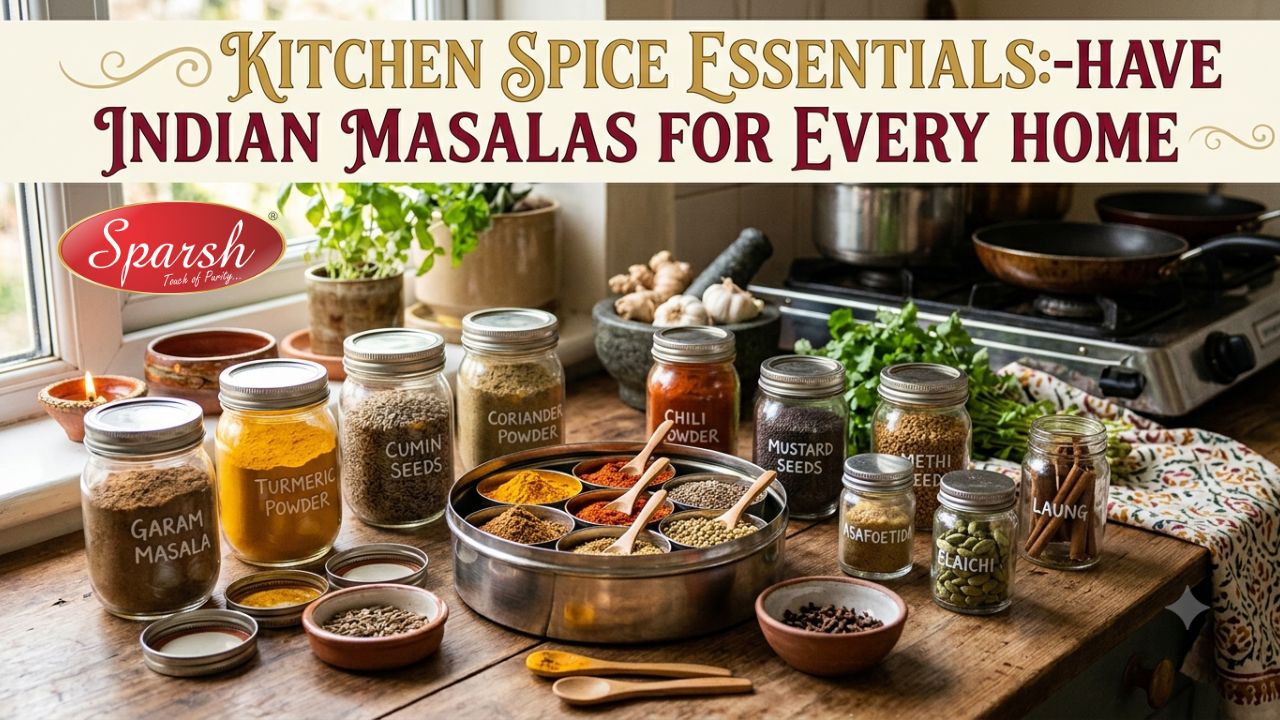
The 7 Must-Have Indian Masalas for Every Home
1. Garam Masala — The Finishing Warmth
Garam masala is the most versatile masala in any Indian kitchen. It is used across North and South Indian cooking, in curries, lentils, rice dishes, and even some desserts. It is a blend of warming spices — cardamom, cinnamon, cloves, black pepper, cumin, coriander — designed to be added at the end of cooking for aromatic warmth and complexity.
What makes it essential: Nearly every savoury dish benefits from a pinch of garam masala in the final minute of cooking. It adds depth without overpowering other flavours.
Quality indicator: Should smell intensely aromatic and warm, never flat or musty. Premium versions use whole roasted spices, not pre-ground powder.
2. Sambar Powder — The South Indian Foundation
Sambar powder is the most essential spice blend for South Indian cooking. It appears in sambar (a tangy vegetable stew), but also in other South Indian preparations. A good sambar powder contains coriander, cumin, fenugreek, chana dal, toor dal, red chilli, and roasted coconut — carefully balanced so no single flavour dominates.
What makes it essential: South Indian cooking is incomplete without sambar powder. If you cook South Indian food even occasionally, this is non-negotiable.
Quality indicator: Look for roasted coconut in the ingredient list — this separates authentic sambar powder from cheap versions. The smell should be toasted and complex.
3. Curry Powder — The Everyday Base
Curry powder is dominated by turmeric with coriander, cumin, fenugreek, and chilli. It is added early in cooking and builds the foundational flavour of curries and gravies. While not traditional to any single region, it remains practical for everyday cooking, especially for beginners.
What makes it essential: Works in regular curries, gravies, rice dishes, and soups. It is the bridge spice that works across multiple cuisines and skill levels.
Quality indicator: Should be golden yellow from turmeric, never orange. No artificial colour or preservatives.
4. Biryani Masala — The Layered Rice Spice
Biryani masala is formulated specifically for biryani and pulav — layered rice dishes. Unlike garam masala, it contains fennel seeds and star anise, which add a distinctive sweet, aromatic character. It cooks into the dish during the slow-steam process.
What makes it essential: If you cook biryani or pulav regularly, this masala is essential. It cannot be substituted with garam masala without compromising the dish.
Quality indicator: Should contain visible whole spices and smell warm, sweet, and aromatic — with a noticeable fennel/star anise note.
5. Chaat Masala — The Tangy Finishing Powder
Chaat masala is a tangy, slightly salty spice powder used on street food snacks, fruits, and light dishes. It contains dried mango powder (amchur), cumin, coriander, black salt, and chilli. It is sprinkled on finished dishes for brightness and tang.
What makes it essential: Transforms simple snacks into flavourful, balanced dishes. Used on everything from fresh fruit to boiled vegetables to yogurt-based dishes.
Quality indicator: Should be slightly tangy when tasted (from amchur) and have a light colour, not dark brown.
6. Kitchen King Masala — The All-Purpose Convenience
Kitchen King Masala is an all-purpose spice blend used across North India. It is added to dal, vegetables, rice, and sometimes snacks. While not traditional to any single region, it is practically useful for busy weeknight cooking when you want flavour without extra steps.
What makes it essential: Works in nearly everything. If you cook quickly and want consistent results without thinking too much about spice combinations, this simplifies the process.
Quality indicator: Should smell balanced and warm, never overly spicy or bitter. No artificial additives.
7. Rasam Powder — The Peppery South Indian Spice
Rasam powder is the spice blend for rasam, a thin, peppery South Indian soup. It is made from black pepper, cumin, coriander, and dried chillies — with no roasted coconut. The emphasis is on peppery heat balanced by tamarind and dal.
What makes it essential: Rasam is a daily dish in South Indian homes. A good rasam powder makes the difference between a balanced, warming rasam and one that tastes harsh or incomplete.
Quality indicator: Should smell peppery and hot, not sweet or nutty. Fine, uniform texture.
Building Your Kitchen Spice Essentials Strategy
You do not need to buy all 7 masalas at once. Build your collection gradually based on what you actually cook.
Phase 1: The Essential 3 (Start Here)
These 3 masalas cover 70% of everyday cooking:
Garam Masala — for finishing curries and everyday dishes
Sambar Powder or Curry Powder — choose based on whether you cook South or North Indian food
Chaat Masala — for snacks and light dishes
Budget: 200–300 INR for quality versions
Phase 2: Add Regional Masalas (If You Cook That Cuisine)
If you cook South Indian food regularly: Add Rasam Powder and Biryani Masala
If you cook North Indian food regularly: Add Kitchen King Masala and Biryani Masala
Budget: 150–250 INR additional
How to Choose Quality Kitchen Spice Essentials
Not all masala powders are equal. The difference between mediocre and excellent is usually visible and olfactory — you can see it and smell it before you taste it.
Check the ingredient list. Quality masalas list ingredients by name — coriander, cumin, fenugreek — not vague terms like “spices” or “condiments.”
Smell it. Quality masala powder should smell intense, aromatic, and complex. Stale masala smells flat, musty, or chemical.
Look for whole spices. Premium masalas contain visible pieces of whole spices — cardamom husks, cinnamon bark, clove fragments. This indicates the masala was ground from whole spices, not pre-ground powder.
Check for regional authenticity. Authentic South Indian masalas use Byadgi chilli from Karnataka, not generic red chilli. This matters for flavour.
Verify manufacturing date. Quality brands print manufacturing dates. Masala is best within 6 months of manufacturing.
Avoid artificial additives. Do not buy masalas with artificial colour, MSG, preservatives, or anti-caking agents.
Sparsh Masala spice essentials are made from whole roasted spices with zero artificial additives — making them ideal for every home cook who wants quality results.
Storage Tips for Kitchen Spice Essentials
Proper storage extends shelf life and preserves flavour.
Transfer masala powders to airtight glass jars immediately upon purchase. Cardboard packets are porous and allow air and moisture to seep in.
Store in a cool, dark, dry place away from the stove, oven, and window. Heat and light degrade the aromatic compounds.
Do not refrigerate. Temperature fluctuations and condensation inside refrigerators cause clumping and loss of aroma.
Label jars with purchase or expiry dates so you know how old the masala is.
Most masala powders stay fresh for 6–12 months in proper storage, though flavour peaks in the first 3 months.
Frequently Asked Questions
1. Do I really need all 7 must-have masalas or can I just use generic curry powder for everything?
You can cook with generic curry powder, but the results will be limited. Each masala is formulated for specific dishes and regional cuisines. If you cook diverse Indian cuisines, having dedicated masalas significantly improves your results. Start with the essential 3 and add others as you explore different cuisines.
2. What is the difference between store-bought and homemade masala powder?
Homemade masala is fresher, more aromatic, and uses whole spices that you roast and grind. Store-bought masala is more convenient but varies greatly in quality. Premium store-bought masala made from whole roasted spices and no additives is nearly as good as homemade. Cheap store-bought masala is significantly inferior.
3. How long do kitchen spice essentials stay fresh?
Most masala powders stay fresh for 6–12 months in proper airtight storage away from heat and light. Flavour peaks in the first 3 months. If the masala smells flat or musty, it has degraded and should be replaced.
4. Can I substitute one masala for another in a recipe?
Sometimes, but results will differ. Garam masala can sometimes substitute for mixed spices in emergencies. But sambar powder cannot replace curry powder without changing the dish significantly. When in doubt, follow the recipe’s specific masala recommendation.
5. Which masala should a beginner start with?
Start with garam masala and curry powder — these work in the widest variety of dishes and are most forgiving for beginners. Once comfortable with these, add sambar powder if you cook South Indian food, or add biryani masala if you cook biryani regularly.
CONCLUSION
The foundation of great Indian cooking is not complicated recipes or fancy equipment. It is having the right kitchen spice essentials on hand — the must-have Indian masalas that cover everyday cooking with authenticity and depth. With just 7 carefully chosen masala powders, you can cook virtually any Indian dish with confidence.
Start with the essential 3. Build gradually. Invest in quality. Store properly. And enjoy the transformation that proper masala powders bring to your cooking.