
Which Masala Is Best for Biryani? Complete Guide
Biryani is one of those dishes where the spice blend makes or breaks the entire experience. Use the wrong masala and the rice tastes flat, the meat lacks depth, and the layers of flavour never develop. Use the right one and every forkful is aromatic, complex, and memorable. But walk into any Indian grocery store and you will see a dozen different options: biryani masala, garam masala, pulav masala, curry powder, and region-specific blends like Hyderabadi or Kolkata biryani masala. So which masala is best for biryani?
The answer depends on three things: the type of biryani you are making, whether you want convenience or authenticity, and how much control you want over the spice balance. In this guide, we break down every option — biryani masala vs garam masala, homemade vs store-bought, regional variations, and product recommendations — so you can choose the best masala for your biryani and get restaurant-quality results at home.
The Short Answer: Which Masala Is Best for Biryani?
For authentic, aromatic biryani, biryani masala (also called biryani pulav masala) is the best choice. It is specifically formulated for layered rice dishes like biryani and pulav, with a balance of warming spices, mild heat, and aromatic depth that garam masala and curry powder cannot replicate.
If you are making biryani at home and want the closest thing to restaurant quality, use a dedicated biryani masala — either homemade or a high-quality store-bought version like Sparsh Masala Biryani Pulav Masala, which is made with authentic Karnataka ingredients including Byadgi chilli and roasted whole spices.
Garam masala can be used as a finishing touch on top of biryani masala, but it should never be the primary spice blend. Curry powder is not suitable for biryani at all — it lacks the aromatic complexity and will turn the dish yellow instead of the rich red-brown colour biryani should have.
Now let us break down why biryani masala is the best choice, and how it compares to other options.
What Is Biryani Masala and What Makes It Different?
Biryani masala is a spice blend designed specifically for biryani and pulav. Unlike general-purpose spice blends, it is formulated to work in a layered rice dish where the spices need to infuse the rice, meat, and vegetables during the slow-cooking (dum) process.
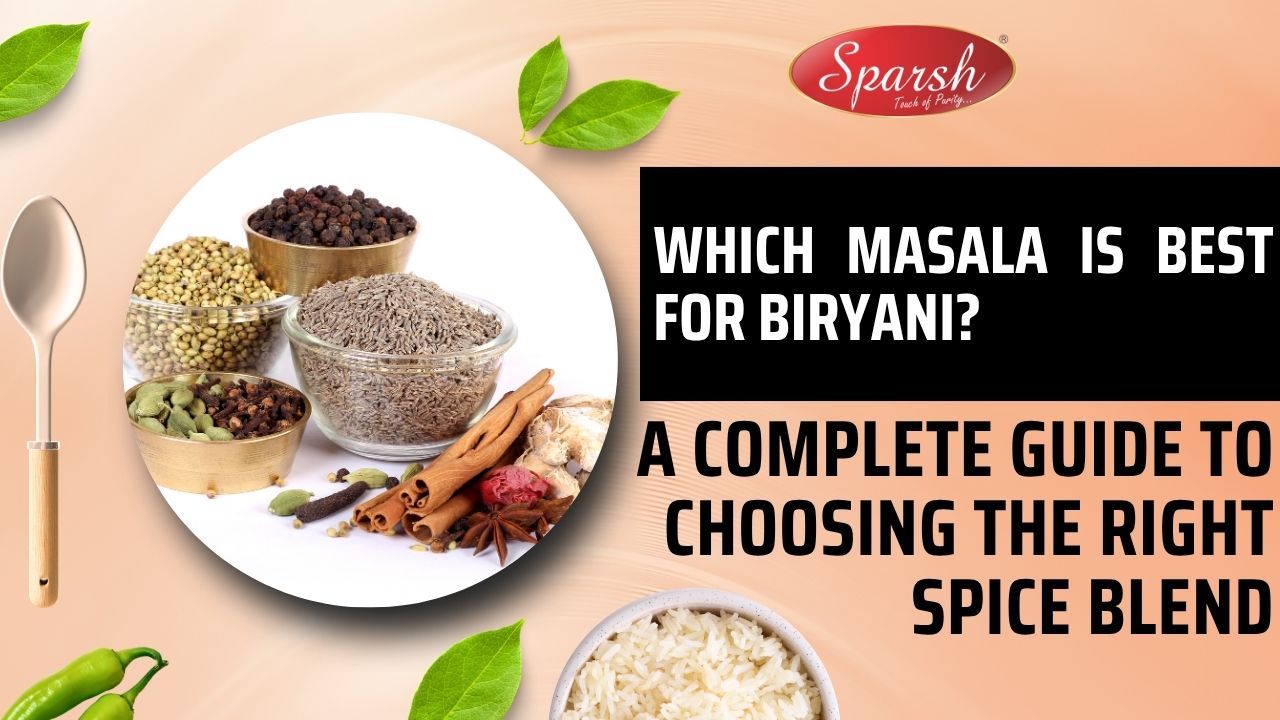
Key Ingredients in Biryani Masala
A traditional biryani masala contains:
Coriander seeds — the base of the blend, provides sweetness and body
Cumin seeds — earthy, warming flavour
Fennel seeds — adds a subtle sweet, licorice-like note that is signature to biryani
Green and black cardamom — floral, aromatic (green) and smoky, intense (black)
Cinnamon or cassia bark — warming, slightly sweet
Cloves — strong, warming, aromatic
Black pepper — mild heat and sharp aroma
Bay leaves — subtle background aroma
Star anise (in some formulations) — adds complexity
Byadgi chilli or Kashmiri chilli — for natural red colour and mild heat
Mace and nutmeg (optional) — adds depth and warmth
Notice the presence of fennel seeds and star anise — these are what separate biryani masala from garam masala. They add a sweet, aromatic layer that complements the richness of the rice and meat. If you want to understand why ingredient sourcing matters, read our guide on Byadgi chilli Karnataka, which explains how authentic regional spices elevate the flavour.
Learn about – Benefits of Spices
When to Add Biryani Masala
Biryani masala is added in two stages:
Stage 1: Marination — 1.5 to 2 teaspoons mixed into the yogurt-based marinade with ginger-garlic paste, turmeric, and lemon juice
Stage 2: Layering — 1 teaspoon sprinkled between the rice layers along with fried onions, saffron milk, and ghee
This dual application ensures the spices penetrate both the protein and the rice, creating the layered complexity that defines good biryani.
Biryani Masala vs Garam Masala — What Is the Difference?
This is the most common confusion. Both are warming spice blends. Both smell incredible. But they are formulated for completely different purposes.
Garam Masala Is a Finishing Spice
Garam masala is designed to be added at the end of cooking — in the last 1–2 minutes or even after the dish is plated. Its aromatic compounds are volatile, which means they degrade quickly under sustained heat. Adding garam masala at the beginning of cooking destroys the fragrance that makes it valuable.
Garam masala typically contains:
Cardamom, cinnamon, cloves, black pepper, cumin, coriander, bay leaves, nutmeg
What it does NOT contain: fennel seeds, star anise, or significant amounts of chilli for colour.
This means garam masala lacks the sweet aromatic notes and the natural red colour that biryani needs. If you use only garam masala in your biryani, the dish will taste warm and fragrant but it will lack the layered complexity and colour depth of authentic biryani.
Can You Use Garam Masala in Biryani?
Yes — but as a finishing touch, not as the primary spice blend.
Here is the correct way to use both:
Biryani masala — 2–3 teaspoons total, added in marination and layering stages
Garam masala — 1/4 to 1/2 teaspoon, sprinkled on top just before serving or added in the final layering step for an extra aromatic boost
Using garam masala instead of biryani masala will give you a fragrant rice dish, but it will not taste like biryani. For a deeper comparison of spice blends, read our full post on the difference between garam masala and curry powder.
Homemade Biryani Masala vs Store-Bought — Which Is Better?
The quality gap between homemade and store-bought biryani masala can be significant — or negligible — depending on the brand you choose.
Why Homemade Biryani Masala Is Superior
Freshness — you roast and grind the spices immediately, so the volatile aromatic oils are at peak potency
Customisation — adjust heat, increase fennel, reduce clove, tweak the blend to your exact preference
No additives — no anti-caking agents, preservatives, or synthetic flavour enhancers
Aroma — the difference is immediately noticeable; homemade masala smells deeper and more complex
If you have 20 minutes and a spice grinder, making biryani masala at home is worth it. We have a complete step-by-step guide on how to make biryani masala at home with roasting tips, ingredient proportions, and storage instructions.
When Store-Bought Biryani Masala Is the Better Choice
Not everyone has the time, equipment, or access to whole spices. A high-quality store-bought biryani masala is a completely acceptable alternative if you choose the right brand.
Look for these qualities in store-bought biryani masala:
Ingredient transparency — the label should list whole spices by name (coriander, cumin, fennel, cardamom), not vague terms like “spices” or “condiments”
No artificial additives — no synthetic flavour enhancers, no anti-caking agents, no artificial colour
Regional authenticity — brands that use Byadgi chilli or Kashmiri chilli for natural colour instead of food dye
Small-batch roasting — this information is usually on the packaging or website
Aroma test — open the packet and smell it; if it smells flat, stale, or chemical, it is low-quality
Sparsh Masala Biryani Pulav Masala meets all of these criteria. It is roasted in small batches, made with authentic Karnataka spices including Byadgi chilli from Haveri district, and contains zero artificial additives. Explore it on the Biryani Pulav Masala product page.
Why Sparsh Masala Biryani Pulav Masala Is the Best Choice for Authentic Biryani
When it comes to choosing the best biryani masala in Karnataka, Sparsh Masala Biryani Pulav Masala stands out for one simple reason: it refuses to compromise on authenticity. While most commercial brands rely on artificial colour, synthetic flavour enhancers, and stale pre-ground spices, Sparsh Masala takes the traditional route — sourcing Byadgi chillies directly from Haveri district for natural deep red colour, roasting whole spices in small batches to preserve volatile aromatic oils, and grinding them fresh without any preservatives or anti-caking agents. The result is a biryani masala that smells intensely fragrant the moment you open the packet, delivers balanced heat without overpowering bitterness, and colours your biryani the way it should look — rich, dark red-brown, not artificial orange.
Whether you are making chicken biryani, mutton biryani, or vegetable biryani, Sparsh Masala Biryani Pulav Masala gives you restaurant-quality depth and complexity at home. It is the closest thing to homemade masala you can buy ready-made, and it is trusted by South Indian kitchens across Karnataka and beyond. Explore the full product range at sparshmasala.in or order directly from Amazon India and BigBasket for fast delivery.
Regional Biryani Masala Variations — Hyderabadi, Kolkata, Lucknowi, Karnataka
Biryani varies significantly by region, and so does the masala blend. If you are making a specific regional biryani, understanding the spice profile helps you choose or adjust your masala accordingly.
Hyderabadi Biryani Masala
Hyderabadi biryani is known for its bold, aromatic, slightly tangy flavour. The masala blend is heavily spiced with:
Green and black cardamom in higher quantities
Star anise and mace for complexity
Dried rose petals (in some traditional versions)
Kashmiri chilli for colour
Hyderabadi biryani masala is more intense than other regional versions. If you are using a generic biryani masala for Hyderabadi biryani, increase the cardamom and add a pinch of mace.
Kolkata (Calcutta) Biryani Masala
Kolkata biryani is milder and subtly spiced, with a noticeable sweetness. The masala is lighter, and the dish often includes boiled eggs and potatoes alongside the meat.
The spice blend leans towards:
Cinnamon and green cardamom (dominant)
Less black pepper and clove compared to Hyderabadi
Nutmeg and mace for subtle warmth
Kolkata biryani masala is the gentlest of all regional versions — perfect if you prefer fragrance over heat.
Lucknowi (Awadhi) Biryani Masala
Lucknowi biryani is elegant, aromatic, and cooked on dum (slow steam) with minimal spice. The masala is restrained and refined:
Green cardamom, cinnamon, cloves in moderate quantities
Saffron and rose water are more prominent than spice heat
Very little or no chilli — the colour comes from saffron, not red chilli
If you are making Lucknowi biryani, use a mild biryani masala and rely more on saffron, fried onions, and ghee for flavour.
Karnataka Biryani Masala
Karnataka-style biryani (common in Mangalore, Udupi, and coastal Karnataka) uses:
- Byadgi chilli for deep red colour and mild heat.
- 2. Roasted coconut (copra) in some versions for richness.
- Curry leaves and fennel for aromatic depth
Sparsh Masala Biryani Pulav Masala follows a Karnataka-inspired formulation — balanced, aromatic, with natural Byadgi chilli colour. It works beautifully for both veg and non-veg biryani.
Common Mistakes When Choosing Masala for Biryani
1. Using Curry Powder Instead of Biryani Masala
Curry powder is dominated by turmeric, which turns everything yellow. It lacks the aromatic complexity of biryani masala and will make your biryani taste like a generic curry instead of a layered rice dish. Never substitute curry powder for biryani masala.
2. Using Only Garam Masala
Garam masala is fragrant but lacks the fennel, star anise, and colour that biryani needs. If you use only garam masala, your biryani will taste warm and spiced but not like authentic biryani. Always use biryani masala as the base and garam masala (if at all) as a finishing touch.
3. Buying Low-Quality Store-Bought Masala
Cheap biryani masala often contains stale spices, artificial flavour enhancers, and synthetic food colour. The aroma is weak, the flavour is flat, and the colour is unnaturally bright red or orange. Invest in a high-quality brand or make it at home.
4. Adding Too Much Masala
More masala does not mean more flavour. Adding too much makes the biryani bitter and overpowering. For 500 grams of meat or vegetables and 2 cups of rice, use 2–3 teaspoons total — 1.5–2 teaspoons in the marinade and 1 teaspoon during layering. If your biryani has been lacking flavour, the masala quality is usually the issue, not the quantity. Read our guide on why biryani lacks flavour for troubleshooting tips.
5. Ignoring Ingredient Quality in Homemade Masala
Homemade biryani masala is only as good as the whole spices you start with. Stale cumin, weak cardamom, or low-quality cloves will produce a weak masala. Always buy whole spices from a trusted source and check the aroma before roasting.
Best Store-Bought Biryani Masala Brands in India
If you are buying biryani masala ready-made, here are the qualities that separate great brands from mediocre ones:
What to Look For
Whole spice ingredients listed by name — not just “spices”
No artificial colour or preservatives
- Regional authenticity — uses Byadgi chilli, Kashmiri chilli, or other named regional spices
- Small-batch roasting — fresher than mass-produced versions
- Transparent sourcing — the brand explains where spices come from
Recommended: Sparsh Masala Biryani Pulav Masala
Sparsh Masala Biryani Pulav Masala is formulated specifically for authentic Karnataka-style biryani. It contains:
- Byadgi chilli from Haveri district for natural red colour and mild heat
- Roasted whole spices including coriander, cumin, fennel, cardamom, cinnamon, and cloves
- Zero artificial additives — no synthetic flavour enhancers, no preservatives, no food dye
- Small-batch roasting using traditional methods
It works for both vegetarian and non-vegetarian biryani, and the spice balance is designed for home cooks — not overpowering, not bland, just right. Explore the full range on the Sparsh Masala veg masala page and non-veg masala page.
For a deeper understanding of why ingredient sourcing matters, read our post on how Sparsh Masala elevates home cooking.
Frequently Asked Questions About Choosing Masala for Biryani
Biryani masala is best for biryani. It is specifically formulated for layered rice dishes and contains fennel seeds, star anise, and natural chilli for colour — ingredients that garam masala lacks. Garam masala can be used as a finishing touch (1/4 teaspoon sprinkled on top before serving), but it should never be the primary spice blend. Using only garam masala will give you fragrant rice, but it will not taste like authentic biryani.
No. Curry powder is dominated by turmeric, which turns the dish yellow and gives it an earthy, one-dimensional flavour. Biryani requires a complex spice blend with aromatic depth and natural red colour from Byadgi or Kashmiri chilli. Curry powder lacks this complexity entirely. If you do not have biryani masala, it is better to use a combination of garam masala, red chilli powder, and whole spices than to use curry powder.
Homemade biryani masala is fresher and more aromatic because you roast and grind the spices immediately before use. However, a high-quality store-bought biryani masala like Sparsh Biryani Pulav Masala (made with whole roasted spices and no artificial additives) is an excellent alternative if you do not have the time or equipment to make it at home. The key is choosing a brand that uses authentic ingredients and traditional roasting methods.
For 1 kilogram of rice (uncooked) and 500–750 grams of meat or vegetables, use a total of 3–4 teaspoons of biryani masala. Add 2 teaspoons in the marinade and 1–2 teaspoons during the layering stage. Start with less if you are using a concentrated, high-quality masala — you can always add more next time, but you cannot fix an over-spiced biryani.
Biryani masala and pulav masala are very similar and are often sold as a single product (biryani pulav masala). The only difference is that pulav masala is sometimes slightly milder because pulav is traditionally less spiced than biryani. In practice, you can use the same spice blend for both dishes — just adjust the quantity. Use slightly less for pulav and slightly more for biryani.
CONCLUSION
So which masala is best for biryani? The answer is simple: biryani masala — a spice blend specifically formulated for layered rice dishes, with fennel seeds, cardamom, cinnamon, cloves, and natural chilli for colour. Garam masala can be used as a finishing touch, but it should never be the primary spice blend. Curry powder is not suitable for biryani at all.
If you are making biryani at home, you have two excellent options: make biryani masala yourself using whole spices (which takes about 20 minutes), or buy a high-quality store-bought version like Sparsh Masala Biryani Pulav Masala, which is made with authentic Karnataka ingredients and zero artificial additives. Either way, the quality of your biryani masala determines the quality of your biryani.